Home / Blogs / Does AI Content Rank on Google? Why Human-Led Content Still Wins Top Positions
Does AI Content Rank on Google? Why Human-Led Content Still Wins Top Positions
 Digital Marketing
What Brands Need to Know Up Front
Yes, AI content can rank on Google. The stronger signal from current data is that human-led content still wins the top positions more often, especially for competitive queries. In Semrush’s April 1, 2026 study of 42,000 blog pages across 20,000 keywords, pages classified as human-written held the No. 1 spot about 80.5% of the time, versus about 10% for AI-generated pages.
The Real Takeaways for Brands and SEO Teams
- AI content can rank on Google. Google says generative AI can be useful for researching a topic and adding structure to original content. Google also warns that generating many pages without adding value can violate its spam policy on scaled content abuse.
- The top spot still skews heavily human-led. Semrush found that position one pages had an 80.5% probability of being human-written versus about 10% for AI-generated content.
- The biggest gap is at the very top, not across every page-one position. Semrush says the separation is strongest at position one, while the gap narrows from position five onward.
- Most serious SEO teams already run hybrid workflows. In Semrush’s survey, 87% of teams said their content is fully human-created or heavily human-led, and 64% said their most common model is human-led, AI-assisted production.
- AI’s clearest benefit is speed, not quality. Semrush found that 70% of SEO teams cite faster content production as AI’s top benefit, while only 19% say it improves content quality.
Why the #1 Google Result Still Favours Human-Led Content
Yes, AI content can rank on Google. That is no longer the real debate. The sharper question is why so much AI-assisted content gets indexed, sometimes reaches page one, and still struggles to hold the top positions for competitive queries. The latest large-scale ranking study gives us a useful signal: in an analysis of 42,000 blog pages across 20,000 keywords, pages classified as human-written held the No. 1 spot about 80.5% of the time, versus about 10% for AI-generated pages. Google’s own guidance points in the same direction. Google does not ban AI content, but it does warn that using generative AI to create many pages without adding value can violate its spam policies.
Human Content vs AI content: What This Actually Means for Brands
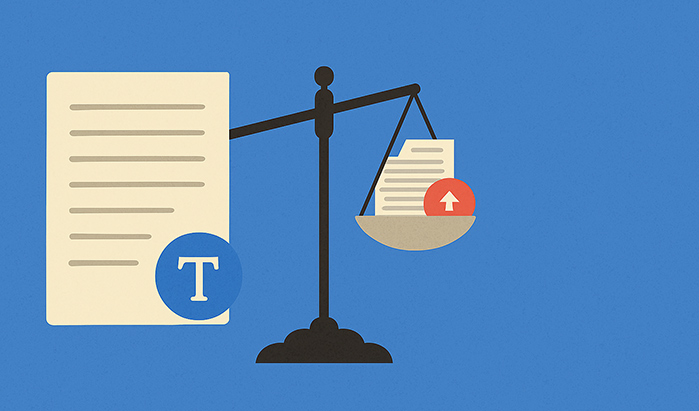
The fact that human content is 8x more likely to rank #1 on Google than AI content looks positive but the real ranking gap is not AI versus human. It is generic versus differentiated. AI can accelerate production. It does not automatically create pages that feel original, useful, precise, or difficult to replace. Google says the best practices for SEO still apply to AI features like AI Overviews and AI Mode, and there are no special optimisations required beyond strong fundamentals, crawlability, snippet eligibility, and people-first content.
The operational lesson is just as clear. Most serious teams are already using AI in a hybrid workflow, not handing content over to automation end to end. In the same dataset, 87% of teams kept humans heavily involved, 64% said their most common model was human-led and AI-assisted, 70% said AI’s biggest benefit was speed, and only 19% said it improved content quality. That tells us where the market is landing: AI is useful as a production accelerator, but editorial judgment is still what separates average content from ranking content.
Why This Matters Now
Search is in a more demanding phase. Google says AI Overviews and AI Mode are surfacing links for more complex questions and deeper follow-up behavior, which means pages need to be easier to trust, easier to extract, and more satisfying once the click happens. Google’s advice remains simple: create unique, non-commodity content that fulfills people’s needs.
That is why this conversation matters now. AI has lowered the cost of producing content. It has not lowered the bar for owning the best answer.
What the “8x More Likely” Headline Actually Tells Us
The headline travelled because it was simple. The real insight is more useful than the headline.
The underlying analysis looked at the top 10 Google results for 20,000 keywords, filtered for blog URLs, and classified 42,000 pages as human-written, AI-generated, or mixed. The sharpest separation showed up at position one. Human-written pages dominated the top slot, while AI-generated pages appeared more often lower on page one. Search Engine Land’s recap described the same pattern and noted that AI content nearly doubled from positions 1 to 4.
| Study Signal | Data Point | What Brands Should Take From It |
|---|---|---|
| Keywords analysed | 20,000 | This was a broad SERP sample, not a handful of examples |
| Blog pages analysed | 42,000 | The clearest conclusions apply to blog content |
| Survey sample | 224 SEO professionals | The perception data came from active practitioners |
| No. 1 result classified as human-written | 80.5% | Human-led content still dominates the top slot |
| No. 1 result classified as AI-generated | ~10% | AI can rank, but it is far less common at position one |
| Teams keeping humans heavily involved | 87% | Fully automated publishing is not the norm among serious teams |
| Teams using human-led, AI-assisted workflows | 64% | Hybrid production is the dominant operating model |
| Teams citing speed as AI’s top benefit | 70% | AI is strongest as a workflow accelerator |
| Teams saying AI improves content quality | 19% | Speed and ranking strength are not the same thing |
All data points above come from the same April 2026 study and its published summary.
The smarter reading is practical, not ideological. AI content can rank. Human-led content still appears to win the highest-value positions more often. That is a ranking pattern, not a moral argument.
Verve Insight
The real signal is not that AI cannot rank. It is that generic content rarely wins the most competitive positions. Too many brands confuse page-one presence with ranking strength. The separation becomes clearer when you look at who owns the top 3.
The Real Divide Is Replaceable vs Defensible
Google’s position is consistent. Its systems aim to reward original, high-quality content, and its focus is on the quality of content rather than how it is produced. At the same time, Google’s spam policies make clear that scaled content abuse applies when many pages are created primarily to manipulate rankings and not help users, regardless of whether that content is produced by humans, automation, or both.
That is why the strongest way to frame this topic is not AI versus human. It is replaceable versus defensible.
Replaceable content usually has the same flaws. It mirrors the SERP instead of improving it. It uses familiar intros, safe framing, and broad conclusions. It sounds complete enough to publish, but not specific enough to own the query. Defensible content behaves differently. It adds interpretation. It sharpens the angle. It reflects real editorial choices. It gives both Google and the reader a reason to choose it over everything around it.
Verve Insight
Most brands do not have an AI problem. They have an editorial standards problem. AI just exposes it faster. A weak brief becomes a weak draft at scale.
Why Human-Led Content Still Wins Top Positions
Human-led content usually wins when the query demands judgment, not just coverage.
Originality is one reason. AI is strong at summarising what is already on the web. It is much weaker at deciding what deserves emphasis, what should be challenged, what the current results are missing, and what the reader actually needs next. Google’s guidance for succeeding in AI search explicitly points publishers toward unique, non-commodity content that visitors will find helpful and satisfying.
Trust is another reason. Competitive rankings often depend on precision, not just fluency. A polished summary can sound authoritative. A page with judgment feels authoritative.
Intent match is the third reason. A query like “AI content vs human content SEO” is not asking for a neutral definition. The searcher wants a practical answer: can AI-assisted content still win, what holds it back, and what should brands change now. Pages that answer that tension directly are more likely to win than pages that simply restate the debate.
Where AI-Assisted Content Breaks Down in Competitive SERPs
AI-assisted content rarely fails because of grammar. It usually fails because it feels synthetic, interchangeable, or thin.
- The first breakdown point is framing. Many AI-heavy drafts open with the same safe intros and move through the same section sequence everyone else is already using. Nothing looks obviously wrong. Nothing feels difficult to replace either.
- The second breakdown point is information gain. The page covers the topic, but it does not add evidence, interpretation, examples, or a point of view that makes it more useful than the current top results. In modern SEO, relevance is not enough. The page needs a reason to be chosen.
- The third breakdown point is editorial threshold. Teams publish because the draft looks finished. Coherent content gets indexed. High-threshold content gets chosen. That distinction helps explain why AI-assisted pages can appear on page one while still struggling to hold the top positions, which is exactly where the ranking data shows the strongest separation.
The Verve Content Advantage Framework
At Verve, this is the lens we would use to judge whether an AI-assisted draft is merely publishable or actually difficult to outrank.
The 5 signals that separate filler from ranking content
| Verve Signal | What Weak Content Looks Like | What Stronger Content Looks Like | Score Yourself |
|---|---|---|---|
| Intent precision | Broad topic coverage | Clear answer to the real decision inside the query | /5 |
| Information gain | Repeats the SERP | Adds examples, perspective, or a sharper interpretation | /5 |
| Editorial judgment | Safe, generic structure | Strong narrative choices and deliberate emphasis | /5 |
| Trust signals | No visible expertise | Evidence, specificity, clearer authorship, stronger reasoning | /5 |
| Retrieval strength | Hard to quote cleanly | Clear definitions, concise answer blocks, structured sections | /5 |
Scoring guide
21 to 25: strong contender for top-tier visibility
16 to 20: useful, but still vulnerable
11 to 15: indexable, not defensible
10 or below: content volume, not content advantage
This framework is the practical translation layer brands often miss. Strong content is not just well written. It is well judged.
Continue reading: Boost Content Marketing Performance with Professional SEO Services
What Smart SEO Teams Do Differently
The strongest SEO teams are not refusing AI. They are assigning it the right job.
The current data tells us that at least 65% of teams use AI for core writing tasks like research, editing, and on-page optimisation. Usage drops sharply for areas that need more specialised workflows or subjective review, including visual content creation at 28%, translation at 15%, and video or audio production at 9%.
The same pattern shows up in how teams describe AI’s value. Speed leads. Brainstorming and ideation support follow. Quality improvement trails well behind. A separate perception finding is just as interesting: 72% of SEOs who use AI content believe it performs as well as or better than human-written content in search, up from 64% in the earlier 2024 version of the study, while the share saying it performs worse rose from 9% to 13% and the unsure group dropped from 27% to 15%. The market is not moving toward one clean consensus. It is moving toward sharper opinions shaped by real experimentation.
The stronger play is obvious. Use AI to remove production drag. Use humans to sharpen positioning, improve information gain, pressure-test claims, strengthen internal logic, and decide if the page actually deserves to rank.
Verve Insight
The smartest teams are not using AI to publish more. They are using AI to free up time for the work that actually changes rankings: sharper positioning, stronger information gain, and better editorial calls.
What Brands Should Change Right Now
Most brands do not need more content. They need fewer pages with a higher threshold for publication.
- That is the first change. Publish fewer, stronger pieces. Once everyone can produce faster, volume stops being a real differentiator on its own.
- The second change is to demand stronger human input before publish. Google’s guidance does not tell brands to avoid AI. It tells them to avoid low-value output and to make sure the work meets Search Essentials and spam policy standards.
- The third change is to stop buying content on quantity alone. A monthly blog count is not a strategy. The advantage comes from pages that are more useful, more precise, more original, and more defensible than what already ranks.
Brands hiring an AI SEO Agency or digital marketing agency should push harder on process. Ask how the brief is built. Ask how original insight gets added. Ask who challenges generic framing. Ask what stops AI-assisted content from sounding like every other AI-assisted page in the category.
Related read: AI Is Changing Search – Is Your Content Strategy Still Relevant?
How to Create AI-Assisted Content That Is Actually Hard to Outrank
Start with the decision inside the query. Build the brief around the real tension the searcher is trying to resolve, not just the broad topic.
Plan for information gain. Decide what the page will contribute that the current top results are not contributing clearly enough. That could be a stronger interpretation, a sharper framework, better examples, or a more decisive answer.
Use AI early, not as the final judge. Let it help with research, clustering, outline options, and draft acceleration. Keep editorial judgment human.
Raise the threshold for publish. Every section should either deepen the answer, add evidence, or make the decision easier for the reader.
Write for retrieval as well as ranking. That means concise answer blocks, clear definitions, strong entity alignment, and sentences that can stand alone in summaries. Google says the same foundational SEO best practices still apply for AI features, and pages need to be indexed and eligible to show a snippet in Google Search to appear as supporting links in AI Overviews or AI Mode.
Support the page experience too. Google explicitly notes that even strong content can disappoint users if the page is cluttered or makes the main information hard to find.
FAQ: AI Content, Human Content, and SEO Rankings
Q1. Does AI content rank on Google?
A. Yes. AI content can rank on Google. Google does not ban AI-generated content SEO simply because AI was involved. The stronger signal from current data is that the highest positions still favor content with stronger originality, usefulness, and editorial judgment.
Q2. Does Google penalise AI-generated content?
A. Not automatically. Google’s policies do not treat AI use itself as the violation. Google does warn that generating many pages without adding value can count as scaled content abuse.
Q3. Is human-written content better than AI content for SEO?
A. The cleaner answer is that human-led content still appears to perform better at the top of competitive SERPs. The strongest gap in the latest ranking study showed up at position one, not across every ranking slot equally.
Q4. Why does AI-assisted content often stall outside the top 3?
A. The usual reasons are generic framing, weak information gain, low editorial threshold, and poor intent match. The ranking pattern supports the idea that AI-assisted content can hold its own on page one while still showing weaker performance at the very top.
Q5. Should brands still use AI in their content workflow?
A. Yes, but with discipline. Google says generative AI can be useful for research and structure, and the market data shows that most serious teams already use hybrid workflows rather than fully automated publishing.
Conclusion: What the AI Shift Has Really Changed
AI content can rank. Generic content rarely wins.
That is the clearest lesson brands should take from this phase of search. Human content rank #1 on Google means the top positions still reward content that feels like somebody made decisions inside it. Decisions on angle. Decisions on evidence. Decisions on what to include, what to cut, and what the reader actually needs next.
The winning model is not anti-AI. It is expert-led. Use AI to move faster. Use human judgment to make the page more original, more useful, and more difficult to outrank.
That is also how we see the last phase of search at Verve Media. We worked through the middle of the AI shift while a large part of the market chased volume, shortcuts, and synthetic scale. Our focus stayed on intent, editorial discipline, structure, and content that could genuinely earn its place. Now that the dust is starting to settle, that same discipline is helping us compete more strongly for the commercial searches that matter most to our business in Mumbai.
Verve Insight
The brands that will win the next phase of search are not the fastest publishers. They are the ones with the clearest point of view, the strongest editorial threshold, and the discipline to publish only what deserves to rank.



.jpg)



.jpg)




















.png)