Home / Blogs / AI Digital Marketing for Small Businesses: A Simple Strategy That Works
AI Digital Marketing for Small Businesses: A Simple Strategy That Works
 Digital Marketing
The Strategy That Works
AI digital marketing for small businesses works best when it is used to fix real marketing gaps, not just create more content.
- Start with one clear goal: more calls, bookings, store visits, WhatsApp enquiries, product sales, or qualified leads.
- Map one customer journey before choosing any AI tool.
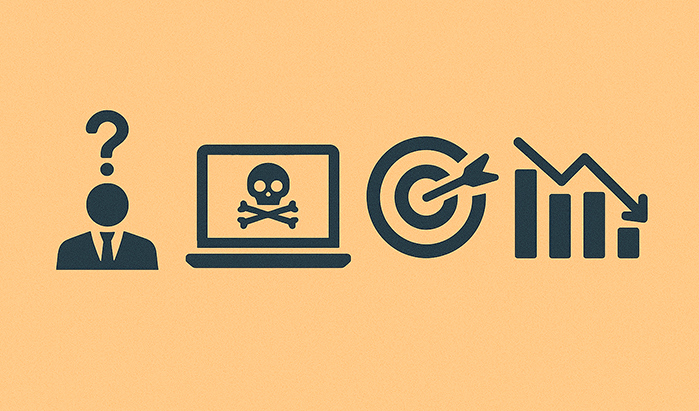
- Find where your marketing is leaking: visibility, website trust, follow-ups, ads, or reporting.
- Use AI for repeated tasks like FAQs, Google Business Profile posts, ad copies, WhatsApp replies, email follow-ups, and report summaries.
- Keep human judgment in charge of brand voice, customer understanding, strategy, and final approvals.
The simplest AI digital marketing strategy is this: find the leak, fix the repeat work, and improve one thing every week.
Why Small Businesses Need a Smarter Way to Use AI
Small businesses rarely lose growth in one dramatic moment. They lose it in tiny leaks.
A WhatsApp enquiry gets answered too late. A customer asks the same pricing question again. A Google Business Profile goes quiet for weeks. An ad gets clicks, but no useful follow-up happens. A report shows traffic, but no one knows what to fix next.
That is where AI digital marketing becomes useful.
Not as a magic tool. Not as a caption machine. Not as a replacement for strategy. AI works when it helps a small business fix the repeated marketing problems that quietly cost leads every week.
The shift is already happening. The 2025 State of Small Business Survey found that 38% of SMBs are using AI, with 28% using it for marketing and social media and 24% using it for written communications. Thryv’s 2025 SMB survey also reported that 58% of AI-using small businesses save more than 20 hours per month, while many say AI saves between $500 and $1,000 monthly.
For Indian small businesses, the need is even more practical. A 2025 India SME Forum report covering 7,835 MSMEs found that 53.8% have adopted at least one digital tool, while 46.2% still operate fully offline. The same report found that 52.6% of respondents find it somewhat or very difficult to identify the right digital tools.
This is why at Verve Media, we look at AI like any other tool: Where is the business losing visibility, trust, leads, or clarity? Once that is clear, AI becomes a support system tool. It helps move faster, organise better, and make sharper marketing decisions.
Who This Blog Is Really For
This blog is for small businesses that are already trying to market online, but do not have a clear digital marketing system yet.
You may already have:
- An Instagram page
- A website
- A Google Business Profile
- A few ads
- Regular WhatsApp enquiries
But everything feels scattered.
- Content is not consistent.
- Enquiries are not followed up properly.
- Reports do not lead to action.
- Ads run, but the learnings are unclear.
This is not for businesses looking to automate everything overnight. It is for small businesses that want to use AI carefully, practically, and with a clear marketing purpose.
We are not talking to someone who wants a list of 25 AI tools. We are talking to the business owner, founder, or lean marketing team asking, “Where do we even start without wasting time, money, or brand credibility?”
AI Does Not Fix Bad Marketing. It Speeds Up Clear Marketing
AI can help small businesses create content, improve ads, prepare replies, study reports, and organise customer questions. But AI cannot fix unclear thinking.
If your service is not explained properly, AI will create more unclear content. If your brand voice is weak, AI will make it sound even more generic. If your funnel is leaking, AI may help you create more posts, but not necessarily more leads.
That is why the smartest AI digital marketing strategy starts before the tool.
A small business should first know:
- What are we selling?
- Who are we trying to reach?
- What action do we want?
- Where are we losing people?
- What questions do customers keep asking?
- What content or follow-up is missing?
Once this is clear, AI becomes powerful. Without this, it becomes noise.
Start With One Goal, Not Ten AI Tools
Small businesses do not need to use AI everywhere on day one. They need to use AI where it supports one clear goal.
That goal could be more calls, more bookings, more store visits, more WhatsApp enquiries, more product sales, or more qualified leads.
Once the goal is clear, the customer journey becomes easier to map.
For example:
- Google search ? service page ? WhatsApp enquiry ? follow-up ? booking
- Instagram reel ? profile visit ? offer message ? enquiry ? sale
- Ad click ? landing page ? form fill ? CRM follow-up ? conversion
This is where many businesses go wrong. They start creating AI content without knowing where that content should take the customer.
A better approach is simple: First decide the journey, then use AI to improve each step of that journey.
Related read: Digital Marketing Strategy: How to Structure a Plan?
Run the Verve AI Marketing Leak Test
Before using AI, find where your marketing is leaking. That is where AI becomes useful fastest.
| If This Is Happening | Your Real Problem May Be | How Verve Can Help |
|---|---|---|
| People are not finding you | Visibility gap | SEO, local SEO, Google Business Profile, content planning |
| People visit but do not enquire | Trust or landing page gap | Website content, FAQs, CTAs, landing page improvement |
| People enquire but do not buy | Follow-up gap | WhatsApp templates, CRM flows, email follow-ups |
| Ads get clicks but weak leads | Offer or targeting gap | Ad testing, retargeting, audience strategy |
| Reports are confusing | Decision gap | Analytics, monthly insights, next-action planning |
This is where AI stops being a content toy and starts becoming a marketing system.
McKinsey’s 2025 State of AI report also notes that AI use is consistently common in IT and marketing and sales, and its latest findings show use cases in marketing strategy, customer service automation, and information processing.
Use AI Where Your Marketing Repeats Every Week
The best place to start is not the most advanced tool. It is the most repeated task.
- A repeated customer question can become a website FAQ.
- A repeated offer can become five ad copies.
- A repeated enquiry can become a WhatsApp reply template.
- A repeated location search can become a local SEO page.
- A repeated report can become a next-month action list.
- A repeated sales objection can become a reel, blog, email, and landing page section.
This is the part small businesses often miss.
The content is already there. It is sitting inside WhatsApp chats, customer reviews, sales calls, old brochures, Instagram comments, and the founder’s head. AI helps pull it out, organize it, and turn it into something usable.
AI can help with blog outlines, Instagram captions, reel hooks, Google Business Profile posts, email drafts, landing page FAQs, ad copies, product descriptions, and AI video generator tools for short-form content creation. It can also support modern visual workflows like image-to-video AI, where static images are turned into engaging video content for ads and social media.
That is much better than asking AI to “write 10 posts for my business” and hoping something works.
A Simple Example: One Customer Question, Five Marketing Assets
Say a local clinic gets the same questions every week:
- “What is the consultation fee?”
- “How long does the appointment take?”
- “Is the treatment painful?”
- “Can I book on WhatsApp?”
- “What should I expect after the visit?”
Instead of answering these manually every time, AI can help turn those questions into:
- A website FAQ section
- A Google Business Profile post
- A WhatsApp reply template
- A short Instagram reel script
- An email reminder for booked patients
The doctor or clinic team still reviews medical accuracy before anything goes live. But the marketing system becomes faster, clearer, and more helpful.
That is the right way to use AI.
Which Small Businesses Benefit Most from AI Digital Marketing?
AI digital marketing can help many small businesses, but these categories usually benefit the fastest because they need regular visibility, trust, replies, and lead follow-up.
| Business Type | Best AI Marketing Use |
|---|---|
| Local Service Businesses | Local SEO, Google posts, service pages, review replies, enquiry templates |
| Restaurants, Cafes, Cloud Kitchens | Menu copy, offers, captions, delivery content, review responses |
| Small E-Commerce Brands | Product descriptions, category pages, ad copy, FAQs, product feed content |
| Coaching, Classes, Education | Course FAQs, parent content, email follow-ups, lead nurturing |
| Real Estate and Interiors | Property copy, location pages, brochures, WhatsApp follow-ups |
| Clinics and Wellness | Educational FAQs, reminders, review replies, appointment content |
| Events, Weddings, Photography | Packages, reels ideas, seasonal campaigns, enquiry replies |
| B2B Small Businesses | LinkedIn posts, case studies, proposals, outreach emails |
The common thread is simple. These businesses do not just need more content. They need clearer communication at every step before the customer makes a decision.
Create Content Faster Without Sounding Generic
AI can make content creation faster. That is useful. But speed without taste is dangerous.
A cafe should not sound like every other cafe. A clinic should not sound careless. A wedding photographer should not sound like a generic caption machine. A B2B service provider should not sound like it copied a LinkedIn template.
This is where a digital marketing agency or social media marketing agency has to do more than generate captions.
AI can help with blog outlines, Instagram captions, reel hooks, Google Business Profile posts, email drafts, landing page FAQs, ad copies, and product descriptions.
But brand voice still needs human editing.
A good AI-assisted content system should sound like the business, not like the tool. At Verve Media, this is where strategy, SEO, creative direction, and customer understanding come together. AI gives the first shape. The brand gives it personality.
Improve Ads, Targeting, and Retargeting Without Burning Budget
Small businesses do not always have the luxury of wasting ad spend.
AI can help create more ad variations before the budget goes live. One offer can become a problem-focused ad, trust-focused ad, location-focused ad, testimonial-led ad, and retargeting ad.
For example, a fitness studio does not need only one ad saying “Join now.” It can test:
- “Start your fitness routine with beginner-friendly trainers.”
- “Looking for a gym near you with flexible plans?”
- “Book a trial session before choosing your membership.”
- “Still thinking about joining? Here’s what new members ask us first.”
That last one is retargeting. It speaks to people who already showed interest but did not convert.
AI can help create options faster. A marketer still needs to decide what is worth testing, what fits the audience, and what connects to the landing page.
Capture Leads Before They Go Cold
Lead generation is only half the job. Lead conversion is where small businesses quietly lose money.
A customer asks for pricing and disappears. Someone fills a form and gets no useful follow-up. A parent asks about a class but is not nurtured. A shopper abandons a cart. A B2B lead downloads a brochure but never gets a relevant message.
AI can help build better follow-up systems through CRM notes, WhatsApp reply templates, email follow-ups, appointment reminders, abandoned cart messages, review requests, lead scoring, and sales response drafts.
The goal is not to make communication robotic. The goal is to make sure warm leads are not forgotten.
This is especially important for small businesses where the owner, sales team, and marketing team may all be the same two or three people.
Turn Data Into a Weekly Growth Checklist
Reports should not be a monthly punishment.
AI can help simplify performance data from GA4, Google Search Console, Meta Ads, Google Ads, CRM tools, and social platforms.
Instead of only asking, “How much traffic did we get?” small businesses should ask:
- Which channel brought better leads?
- Which page got visits but no enquiries?
- Which keyword is improving?
- Which ad got clicks but poor conversions?
- Which post created actual conversations?
- Which follow-up message worked?
- What should we improve next week?
That is where data becomes useful.
Related read: Using Data Analytics to Build Your Digital Marketing Strategy
When Should a Small Business Work With a Digital Marketing Agency?
A small business can start using AI on its own. But if content is going live without leads, ads are running without clarity, local SEO is weak, follow-ups are messy, or reports do not lead to action, it may be time to bring in a digital marketing service that can connect the pieces.
A good digital marketing agency should not just give you posts and ads. It should help connect your website, SEO, social media, paid campaigns, Google Business Profile, content, lead capture, and reporting into one growth system.
At Verve Media, our approach brings together strategy, SEO, content, web, creative, performance marketing, and AI search visibility. The point is not to make small businesses dependent on more tools. The point is to make their marketing sharper, faster, and easier to improve.
Related read: How to Choose a Digital Marketing Agency Ideal for Small Businesses
A Simple Weekly AI Marketing Routine
AI digital marketing does not need to begin with a huge setup.
- Start with one week.
- Review your leads and enquiries.
- Pick one repeated customer question.
- Turn it into one useful content piece.
- Update one Google Business Profile post.
- Create one ad or offer variation.
- Follow up with warm leads.
- Check what worked.
- Improve one thing.
That is enough to begin.
The best AI digital marketing strategy is not about using every AI tool. It is about using AI to fix the small marketing problems that quietly affect growth every week.
Small businesses do not need more noise. They need a cleaner system.
AI can bring speed. Strategy gives it direction. Human judgment gives it trust.
Want AI to Clean Up Your Marketing, Not Complicate It?
At Verve Media, we help small businesses find the exact places where marketing is leaking: Weak SEO, slow replies, unclear content, wasted ad spend, missed follow-ups, or confusing reports.
Then we build a practical AI-supported digital marketing strategy around your business, your customers, and your funnel.
Book an AI Marketing Discovery Audit with Verve Media and find out where AI can make your marketing simpler, sharper, and easier to grow.
FAQs
Q1. What is the best AI digital marketing strategy for small businesses?
The best AI digital marketing strategy for small businesses is to start with one goal, map one customer journey, identify where leads are leaking, and use AI to improve repeated tasks like content, local SEO, ads, customer replies, lead follow-ups, and reporting.
Q2. Can AI help small businesses get more leads?
Yes. AI can help small businesses get more leads by improving local SEO content, creating better ad variations, preparing faster WhatsApp replies, building email follow-ups, and turning customer questions into useful website content.
Q3. Should small businesses use AI for social media marketing?
Yes, small businesses can use AI for social media marketing, but it should support the process, not fully replace it. AI can help with captions, reels hooks, content calendars, and post ideas. Real photos, customer stories, offers, and brand tone still need human input.
Q4. What can AI not do in small business marketing?
AI cannot replace business judgment, customer understanding, expert review, or brand strategy. It should not be used to publish raw content, copy competitors, automate sensitive replies blindly, or make medical, legal, or financial claims without expert approval.
Q5. Why should a small business work with a digital marketing agency for AI marketing?
A digital marketing agency can help small businesses use AI with strategy. Instead of only generating content, the agency can connect SEO, social media, ads, website content, lead capture, follow-ups, and reporting into one practical growth system.
Q6. How can Verve Media help small businesses with AI digital marketing?
Verve Media helps small businesses identify where their marketing is leaking and build an AI-supported strategy across SEO, content, social media, websites, performance marketing, AI search visibility, lead follow-ups, and reporting.
Written by Dilshad, Senior Content Writer at Verve Media
Dilshad builds content strategies that are not just written for algorithms, but for how people actually search, compare, trust, and choose brands onlin
.jpg)
.jpg)





.png)