Home / Blogs / Organic Traffic Dropped After August 18, 2026? How to Tell If Google’s Spam Update Hit Your Site and What to Fix
Organic Traffic Dropped After August 18, 2026? How to Tell If Google’s Spam Update Hit Your Site and What to Fix
 Digital Marketing
Google began its August 2026 spam update on August 18. The rollout lasted 2 days and 16 hours, finishing on August 21. It applied globally and across all languages, and Google did not announce a new spam policy alongside the rollout.
If your Google traffic or rankings declined around the same time, the update is worth investigating. It is not, by itself, proof of what caused the drop.
Google says organic Search traffic can fall because of algorithmic updates, technical issues, spam issues, security problems, site migrations and changing search demand. Its recommendation is to investigate the data before deciding what needs to change.
Our diagnostic sequence is:
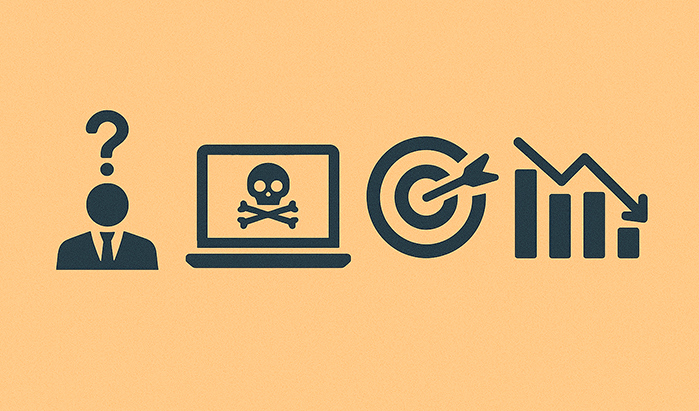
Date → Scope → Pattern → Cause → Fix
First, Confirm What Actually Dropped
Start with Google Search Console. Compare the period after August 18 with a comparable period before it, then break the change down by queries, pages, countries, devices and search appearances. Google specifically recommends this type of segmentation when debugging a Search traffic decline.
Read clicks, impressions and average position together:
| Search Console pattern | What we would investigate first |
|---|---|
| Clicks ↓, impressions ↓, positions worsen | Ranking or visibility loss |
| Clicks ↓, impressions and positions stable | CTR or changes in the search results |
| Impressions ↓, positions relatively stable | Search demand |
| One directory or page type falls | A section, template or content pattern |
| Indexed pages fall too | Crawling or indexing |
These are diagnostic interpretations, not formulas published by Google. The important point is to establish where the loss is concentrated before changing the site.
How Big Is the Ranking Loss?
Google makes an unusually useful distinction here.
A movement from position 2 to 4 is its example of a relatively small ranking drop. Google recommends avoiding radical changes when a page that already performs well experiences this kind of fluctuation.
A move from position 4 to 29, by contrast, is Google's example of a large drop. If that type of decline is sustained across a wide range of queries, Google recommends assessing the site more broadly for helpfulness, reliability and people-first value.
So “traffic is down 30%” still does not tell you what to fix. You need to know which rankings moved, by how much, and across which page groups.
No Manual Action? That Does Not End the Investigation
A clean Manual Actions report does not mean Google's automated spam systems could not have affected visibility.
Google says policy violations are detected through automated systems and, when necessary, human review that can result in a manual action. Sites violating spam policies may rank lower or disappear from results without the issue necessarily beginning as a manual action.
Google describes spam updates as notable improvements to those automated detection systems and tells sites that see changes after a spam update to review its spam policies. It also says improvement may require its systems to observe compliance over a period of months.
Did AI Content Cause the Drop?
AI use alone is not enough to reach that conclusion.
Google says appropriate use of AI or automation is not against its guidelines. What violates its policies is using automation, including AI, primarily to manipulate Search rankings.
Google's scaled content abuse policy focuses on producing many pages primarily to manipulate rankings rather than help users. It explicitly says the problem applies regardless of how the content was created, and its examples include using generative AI to create many pages without adding value.
That changes the audit question.
Instead of asking “Did we use AI?”, ask:
Do the pages that lost visibility share the same template, structure, publishing process, search-first purpose or lack of original value?
For a site with hundreds of location, service, comparison or programmatic pages, that distinction matters.
Why Google's S-CTS Research Is Relevant, With an Important Caveat
Google Research published the Scalable Cluster Termination System (S-CTS) for detecting coordinated synthetic spam on online video platforms. Google has not said that S-CTS is used in Google Search or that it powered the August 2026 spam update.
The research is relevant because it demonstrates why analysing content only as isolated items can struggle when generative systems produce large numbers of unique-looking but functionally similar outputs. S-CTS instead combines content patterns with signals such as account relatedness, common automation or scripts, repetitive templated narratives and high-frequency publishing behaviour.
The results show how seriously Google is researching pattern-level detection. S-CTS was evaluated on 16,250 weekly candidate channels, achieved a false-positive rate below 0.05%, routed 74% of cases automatically and saved more than 1,100 human review hours per week.
Google’s paper also reports a 32% reduction in cluster-validation time, a 50% reduction in synthetic-content review time, 92–95% precision thresholds for automated violation decisions and an overturn rate below 1% for identified coordinated clusters.
Industry reports after the August update suggested that mass-produced AI SEO content may have been among the affected patterns, but Google has not confirmed that connection. Treat it as an observation, not an explanation of how the update worked.
For website owners, the practical question is simpler:
If 300 URLs lost visibility, are they 300 separate problems, or are they one repeated publishing pattern?
What Should You Fix First?
Do not jump from Date → Fix.
- Date: Establish when the decline actually began.
- Scope: Find whether it is sitewide, directory-level, template-level or query-level.
- Pattern: Compare losing pages with pages that stayed stable.
- Cause: Separate ranking changes from technical, indexing, demand and spam-policy issues.
- Fix: Address the underlying problem the evidence points to.
If a publishing workflow or template is producing the same weakness across hundreds of pages, changing five URLs in isolation will not address the system behind them. If the problem is technical, rewriting content will not solve it either.
Google says some changes can show effects within days, while others can take several months, and recommends giving meaningful changes time before reassessing them in Search Console.
The goal is not to prove that the August update “hit” your website.
It is to establish what changed, where the loss occurred, what the affected pages have in common, and which fix has evidence behind it.
August 18 tells you where to start looking. Your data tells you what to fix.
Written by Dilshad, Content Lead at Verve Media
Dilshad builds content strategies that are not just written for algorithms, but for how people actually search, compare, trust and choose brands online.



.jpg)



.jpg)






















.png)