Home / Blogs / How To Turn AI Search Visibility Data Into GEO Strategy
How To Turn AI Search Visibility Data Into GEO Strategy
 SEO
SEO
TL;DR
AI Search Visibility data is not a strategy by itself. It shows where your brand appears, where competitors are cited, which sources AI tools trust, and which pages are missing from AI-driven search results.
A strong GEO strategy turns that data into action by grouping prompts by intent, separating mentions from citations, mapping cited sources, diagnosing visibility gaps, prioritising high-value opportunities, and creating content assets that are clear, structured, credible, and easy for AI systems to reference.
In simple terms: AI Search Visibility data shows the gap. GEO strategy decides what to fix first.
Why AI Search Visibility Data Is the First Step in Generative Engine Optimisation
The mistake is treating AI Search Visibility data like a report.
It should be treated like a backlog.
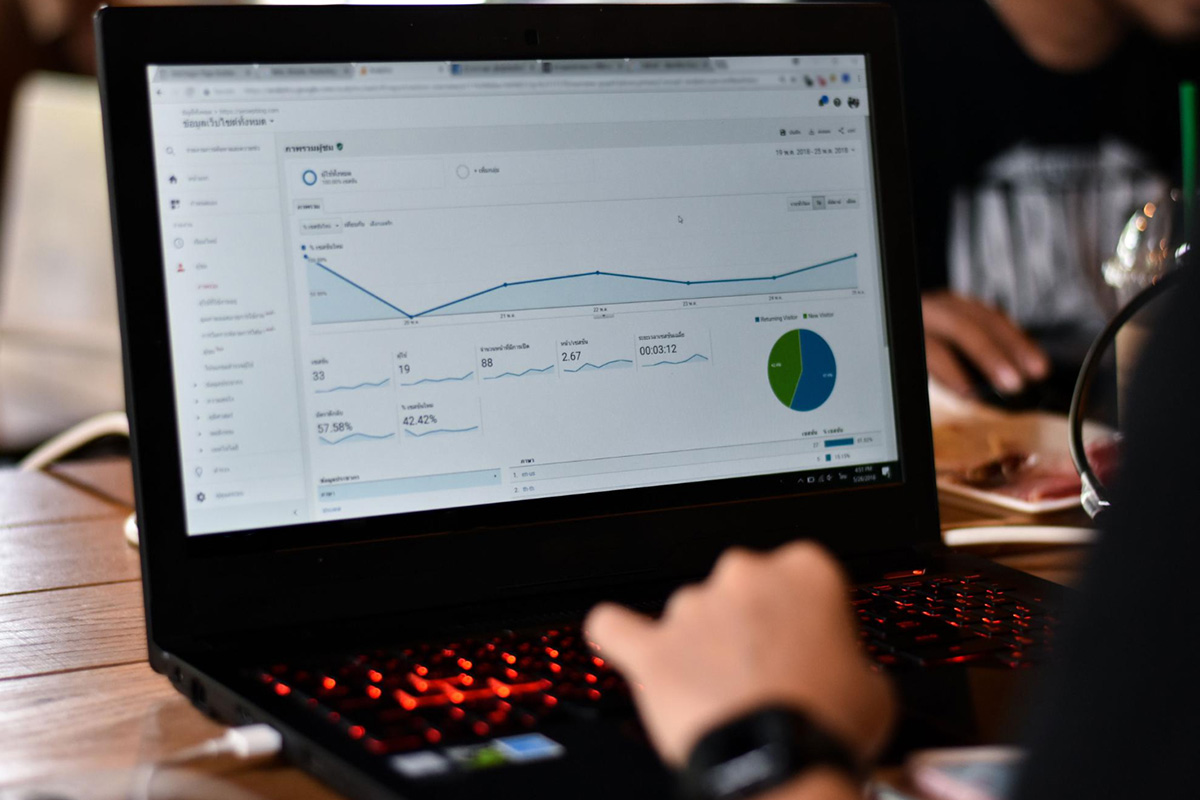
A dashboard can show that your brand is missing from ChatGPT, Gemini, Perplexity, or Google’s AI-led results. It can show that competitors are being cited more often. It can show which pages are referenced and which prompts create visibility gaps.
But the dashboard is not the strategy.
The real work starts after the data is collected.
That is where Generative Engine Optimisation, or GEO, becomes important. GEO is the process of improving how a brand is discovered, cited, described, and trusted inside AI-driven search results. Experts frame GEO as part of the broader AI SEO shift, where the goal is not just ranking but being seen, trusted, and reused wherever people search for answers.
Recent coverage on AI search visibility also focuses on the same challenge: SEO teams can now see where they are invisible in AI search, but they need a practical way to close citation gaps and prioritise what matters.
So the real question is not:
“Are we visible in AI search?”
The better question is:
“Which gaps are stopping us from being cited, trusted, or accurately represented?”
AI Search Visibility Data Is Diagnostic, Not Strategic
Traditional SEO reporting is built around rankings, impressions, clicks, traffic, and conversions.
Those metrics still matter. But AI search adds another layer.
In an AI-led journey, a user may read a generated answer, compare options inside the response, notice cited sources, and form an opinion before visiting a website. Google says its AI search features can surface supporting links and that standard SEO fundamentals still apply, including crawlability, helpful content, internal links, page experience, images, videos, and structured data that matches visible content.
So the old SEO question was:
Are we ranking and getting traffic?
The GEO question is:
Are we being included, cited, and represented correctly when AI systems answer high-intent questions?
That is the strategy shift.
GEO is not a replacement for SEO. It is an extension of SEO for AI-driven discovery.
Start With Prompt Clusters, Not Random AI Queries
A common mistake is testing random prompts and calling that AI visibility research.
That gives you scattered observations, not strategy.
Start by grouping prompts into clusters.
| Prompt Cluster | Example Query | What It Reveals |
|---|---|---|
| Category prompts | Best AI SEO Agency for B2B brands | Whether your brand appears in high-intent category answers |
| Problem prompts | Why is my brand not showing in AI search? | Whether your content answers pain-point-led queries |
| Comparison prompts | Agency A vs Agency B for GEO | Whether you appear when users compare options |
| Use-case prompts | AI search optimisation for SaaS brands | Whether your expertise is tied to specific use cases |
| Proof prompts | GEO case studies for AI visibility | Whether AI tools can find evidence of results |
| Brand prompts | What does this digital marketing agency specialise in? | Whether your positioning is accurate |
This matters because every prompt type needs a different fix.
A category gap may need a stronger service page.
A comparison gap may need alternative pages.
A proof gap may need case studies.
A brand gap may need better entity clarity.
Good AI search optimisation starts with knowing which type of question you are trying to influence.
Separate Mentions, Citations, and Source Influence
Not all AI visibility is equal.
A brand can be mentioned without being cited. It can also be absent while competitors are repeatedly referenced through third-party sources.
Note this distinction clearly: Mentions get a brand into the conversation, while citations make the brand or its content part of the answer.
| Signal | What It Means | Why It Matters |
|---|---|---|
| Mention | AI includes your brand in the answer | Shows awareness or association |
| Citation | AI uses your page as a supporting source | Shows source-level trust |
| Source influence | AI relies on third-party sources to shape the answer | Shows where external authority is influencing visibility |
This distinction is important.
If your brand is mentioned but your website is not cited, the issue may not be awareness. It may be source value.
If competitors are cited and you are not mentioned at all, the issue may be category visibility.
If third-party sites keep shaping the answer, the issue may be authority outside your owned website.
This is where an AI SEO service should go deeper than “you appeared” or “you did not appear.” It should explain why.
Build a Cited Source Map
Once prompts are clustered, map which sources AI tools are using.
This is where AI Search Visibility data becomes useful for execution.
| Prompt Cluster | Who Appears? | What Source Is Cited? | Source Type | Action Needed |
|---|---|---|---|---|
| Best AI SEO Agency | Competitor A | Industry listicle | Third-party | Earn inclusion or create stronger category content |
| AI search optimisation | Your brand | Blog page | Owned | Improve structure, examples, and internal links |
| GEO strategy | Competitor B | Service page | Competitor-owned | Build a stronger GEO service page |
| AI SEO service | No clear brand | Broad explainer | Publisher | Create a category page and FAQ asset |
| Digital marketing agency for AI search | Competitor C | Review page | Third-party | Strengthen reviews, PR, and comparison visibility |
This is similar to how Bing’s AI Performance reporting helps site owners understand cited pages and grounding query phrases. Bing says these insights help validate which pages are used as references, identify content that appears frequently in AI answers, and find opportunities to improve clarity, structure, or completeness.
The useful question is: Which sources are AI systems trusting, and why are they not trusting ours?
That answer shapes the GEO roadmap.
Diagnose the Type of GEO Gap You Are Dealing With
Not every AI visibility issue is a content gap.
Treating every problem as “we need more blogs” is beginner-level GEO.
AI visibility gap is a topic, prompt, or context where competitors appear in AI-generated answers and your brand does not, and separates gaps into areas such as topic gaps, prompt-level gaps, sentiment gaps, and citation gaps.
For strategy, it helps to diagnose the gap more specifically.
| GEO Gap | What It Means | Likely Fix |
|---|---|---|
| Visibility gap | Your brand does not appear for relevant prompts | Build or improve topic-specific content |
| Citation gap | Your brand appears, but your site is not cited | Improve page structure, clarity, and source value |
| Competitor gap | Competitors are cited or recommended instead | Create comparison, alternative, and category content |
| Accuracy gap | AI tools describe your brand or services incorrectly | Update About, service, schema, and entity signals |
| Authority gap | Third-party sources influence answers more than your site | Build PR, reviews, mentions, and external validation |
| Freshness gap | AI tools surface outdated information | Refresh old pages and update brand/service details |
The strategy depends on the gap.
A citation gap is not solved the same way as an authority gap.
A brand accuracy issue is not solved the same way as a content depth issue.
A competitor gap may require both owned content and third-party validation.
That is why GEO needs diagnosis before execution.
Prioritise GEO Opportunities by Business Value
Not every AI visibility gap deserves immediate action.
A missing citation for a low-intent educational prompt may be less urgent than being absent from a high-intent comparison prompt.
Use a simple scoring model.
Score each opportunity from 1 to 5:
| Factor | Question to Ask |
|---|---|
| Business value | Does this query affect revenue, trust, or lead quality? |
| Competitor dominance | Are competitors repeatedly appearing or being cited? |
| Gap severity | Are we absent, mentioned, or cited? |
| Page readiness | Do we already have a page that can be improved? |
| Source feasibility | Can we realistically earn or improve the source? |
Then use: GEO Priority Score = Business Value + Competitor Dominance + Gap Severity + Page Readiness + Source Feasibility
This keeps the strategy focused.
A good SEO Agency or AI SEO Agency should not treat every prompt equally. It should prioritise the gaps that affect consideration, trust, and conversions.
Turn Visibility Patterns Into GEO Content Priorities
Once the gaps are scored, turn them into content priorities.
| Visibility Pattern | GEO Content Priority |
|---|---|
| Competitors appear in category answers | Build category authority pages |
| Competitors appear in comparison prompts | Create comparison and alternative pages |
| AI tools miss your service details | Improve service pages, FAQs, and internal links |
| AI answers cite listicles or publications | Invest in PR, guest posts, and third-party mentions |
| Users ask specific long-tail prompts | Build question-led blog clusters |
| AI tools misunderstand your positioning | Strengthen About, service, case study, and schema content |
| Your cited content is outdated | Refresh pages with current examples, dates, and proof |
This is where generative engine optimisation GEO becomes practical.
The goal is not to publish more content.
The goal is to build the missing evidence that AI systems and users need.
For example, if your brand is missing from “best AI SEO Agency” prompts, you may need:
- A stronger AI SEO service page
- A GEO strategy page
- Comparison content
- Case studies
- Third-party mentions
- Reviews
- FAQs that answer buyer-stage questions
That is a content system, not a one-off blog.
Create Citation Assets, Not Just More Blog Posts
AI systems need content they can understand, extract, and reference.
So instead of asking, “What blog should we write next?” ask:
What citation asset do we need to close this gap?
| Gap Type | Best Citation Asset |
|---|---|
| Definition gap | Glossary-style explainer |
| Comparison gap | Comparison page or alternatives page |
| Category gap | “Best X for Y” category page |
| Proof gap | Case study or results page |
| Trust gap | Reviews, testimonials, third-party mentions |
| Process gap | Checklist, framework, or step-by-step guide |
| Data gap | Benchmark, survey, or statistics page |
| Accuracy gap | Updated About, service, and schema-supported entity pages |
GEO can be simply be described as structuring content and digital presence so AI-powered platforms can retrieve, cite, and recommend your brand when answering user questions.
That means citation assets should be:
- Clear
- Specific
- Current
- Well-structured
- Easy to quote
- Supported by examples
- Connected through internal links
- Backed by proof where possible
This is how content becomes useful to both users and AI systems.
What to Measure When GEO Success Is Bigger Than Clicks
GEO cannot be measured only through traffic.
Clicks still matter. But AI search can influence decisions before the click happens.
OpenAI describes ChatGPT Search as providing timely answers with links to relevant web sources, which means source visibility and citation presence are part of the search journey.
Measure these instead:
| Metric | Why It Matters |
|---|---|
| AI mentions | Shows whether your brand appears in AI answers |
| AI citations | Shows whether your pages are used as supporting sources |
| Prompt coverage | Shows how many relevant prompts include your brand |
| Citation share vs competitors | Shows who dominates AI answer visibility |
| Citation gap rate | Shows where you are mentioned but not cited |
| Owned vs earned source mix | Shows whether AI tools trust your website, third-party sources, or both |
| Brand accuracy | Shows whether AI systems explain your brand correctly |
| Answer sentiment | Shows whether AI mentions are positive, neutral, or negative |
| Page-level citation performance | Shows which pages are actually useful to AI systems |
| Branded search lift | Shows whether AI visibility is creating demand |
| Assisted conversions | Connects AI visibility to business outcomes |
The better question is not only:
Did this generate traffic?
It is also: Did this make our brand more present, more accurate, and more credible in the decision journey?
That is the measurement mindset GEO needs.
Build a GEO Action Plan From AI Search Visibility Data
A useful GEO plan should be simple enough to execute.
| Step | Action |
|---|---|
| 1. Audit visibility | Identify where the brand appears, disappears, or is misrepresented |
| 2. Cluster prompts | Group queries by category, problem, comparison, use case, proof, and brand intent |
| 3. Map cited sources | Identify which owned and third-party pages AI tools cite |
| 4. Diagnose the gap | Decide whether the issue is visibility, citation, authority, accuracy, or freshness |
| 5. Score the opportunity | Prioritise based on business value, competitor dominance, gap severity, page readiness, and feasibility |
| 6. Match the asset | Choose the right format: service page, FAQ, comparison page, case study, PR, review strategy, or blog cluster |
| 7. Improve source value | Make content clear, current, structured, specific, and easier to cite |
| 8. Re-measure | Track changes in mentions, citations, accuracy, competitor share, and prompt coverage |
For a digital marketing agency, this changes how content planning works.
Blog calendars, service pages, technical SEO, digital PR, case studies, FAQs, reviews, and entity optimisation can no longer operate separately. They need to work together as part of a broader artificial intelligence strategy for search visibility.
A related internal link can be placed here:
Related read: AI SEO Service: Boost Visibility in AI-Driven Search Results
Building a GEO Strategy That Improves AI Search Visibility
AI Search Visibility data is not the end result.
It is the diagnostic layer.
It tells you where your brand appears, where competitors are stronger, which sources AI systems trust, and where your content is not being used.
But GEO strategy is what turns that data into action.
A strong GEO strategy helps brands close citation gaps, improve source value, build the right citation assets, strengthen third-party authority, fix inaccurate brand representation, and compete more effectively in AI-driven search results.
The brands that win in AI search will not simply be the ones that monitor dashboards.
They will be the ones that know:
- Which prompts matter
- Which sources are shaping answers
- Which gaps are hurting visibility
- Which pages need improvement
- Which third-party signals need to be built
- Which citation assets should be created first
AI Search Visibility data shows the problem. GEO strategy turns it into a plan.
FAQs on AI Search Visibility Data and GEO Strategy
Q1. What is AI Search Visibility data?
A. AI Search Visibility data shows how and where a brand appears in AI-generated search results, including mentions, citations, competitor visibility, and source references.
Q2. What is GEO strategy?
A. GEO strategy is the process of improving how a brand is discovered, cited, and represented inside generative AI search results.
Q3. How do you use AI Search Visibility data?
A. Use AI Search Visibility data to cluster prompts, map cited sources, diagnose gaps, prioritise opportunities, and create citation-worthy content.
Q4. What is a citation gap?
A. A citation gap happens when competitors or third-party sources are cited in AI answers, but your brand or website is not.
Q5. What should GEO success measure?
A. GEO success should measure AI mentions, citations, prompt coverage, citation share, brand accuracy, source mix, and assisted conversions.
Turn AI Search Visibility Data Into a Smarter GEO Strategy
AI search is changing how users discover, compare, and trust brands. Simply tracking visibility is not enough. The real advantage comes from knowing which gaps to fix, which prompts to prioritise, and which content assets can improve your presence in AI-driven search results.
At Verve Media, we help brands turn AI Search Visibility data into a practical GEO roadmap. From SEO and AI search optimisation to content strategy, technical improvements, citation assets, and digital authority building, we create strategies that help your brand become easier to find, understand, and reference across modern search journeys.
Ready to improve your visibility in AI-driven search results?
Partner with Verve Media to build a GEO strategy that turns AI visibility insights into stronger content, better citations, and clearer brand authority.

.jpg)
.jpg)























































.jpg)



.png)

.png)


