Home / Blogs / How AI Overviews Affect Google Click Rates
How AI Overviews Affect Google Click Rates
 SEO
SEO
TL;DR Keynotes
- Google’s AI Overviews cut CTRs by 15–37%; even top results lose clicks.
- Zero-click searches now exceed 58% of all Google queries.
- Informational keywords are hit hardest; commercial and local terms hold up better.
- Focus on content AI can cite, mid-funnel intent, and converswhat are AI Overviewsion per click.
- SEO is no longer about ranking—it’s about visibility inside the AI answer layer.
Introduction
Let’s start with the uncomfortable truth: when a Google AI Overview appears, even the #1 organic result can see its click-through rate (CTR) plunge by a third.
That’s not opinion, it’s what a large-scale analysis found after comparing pre- and post-AI Overview periods across hundreds of thousands of keywords.
At the same time, Google is showing AI Overviews more often, 13.14% of U.S. desktop searches in March 2025, up from 6.49% in January, shrinking the real estate (and attention) available to traditional listings. That’s not a rounding error, that’s pipeline.
In this guide, we’ll break down how Google AI Overviews, part of Google’s generative AI search rollout, are changing user behaviour. For performance-minded marketers, that means fewer clicks for the same (or more) impressions, rising acquisition costs, and reporting headaches. As an AI SEO agency, we’ve seen these shifts firsthand across dozens of campaigns. Let’s unpack what’s happening and how to defend your pipeline.
What Are Google AI Overviews?
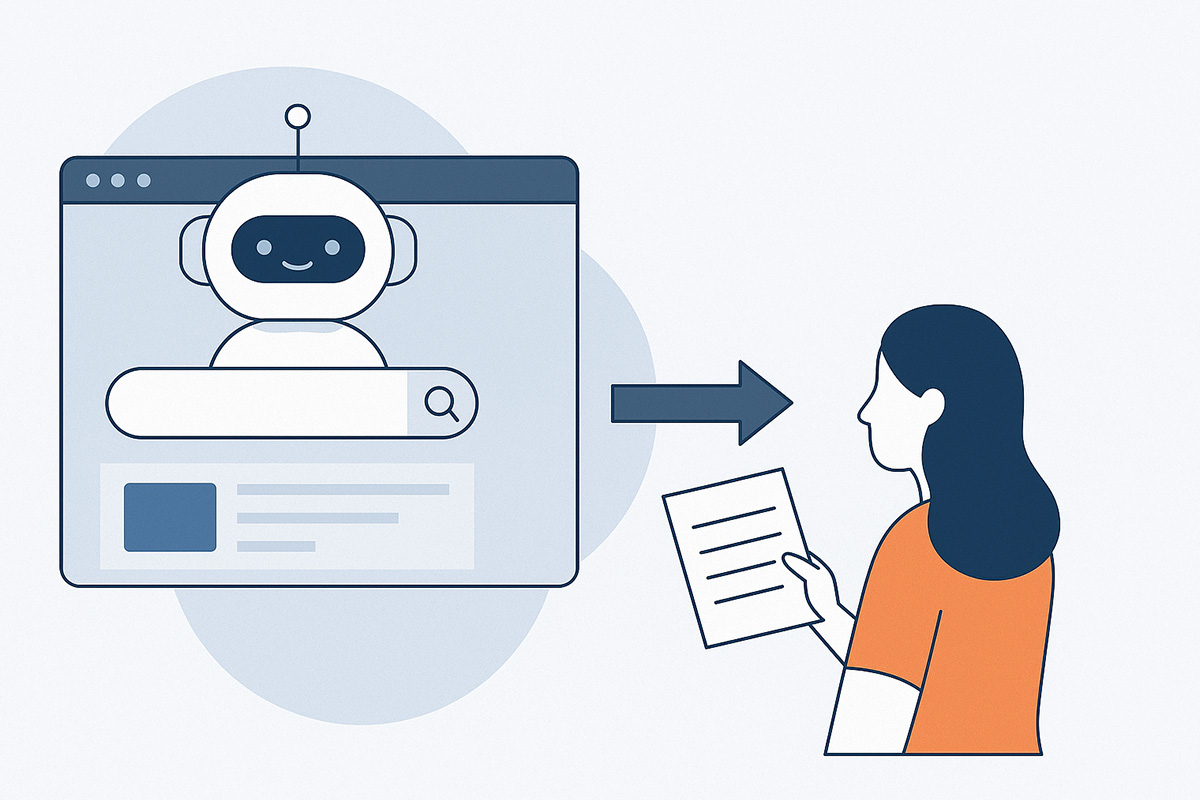
Google AI Overviews are machine-generated summaries that appear above (or among) the organic results. They synthesise information from multiple sources to deliver a “one-screen answer,” often with cited links.
If you’re wondering or how they differ from other AI search platforms, the answer lies in how Google generative AI search summarises web results.
Importantly, they change user behaviour by reducing the need to click, an extension of the broader zero-click trend where 58.5% of U.S. searches (and 59.7% in the EU) end without a click to the open web.
How AI Overviews Change the Search Experience
Now three shifts matter most:
- Attention compression: The AI box becomes the answer layer, pushing classic blue links down and lowering scroll propensity.
- Zero-click acceleration: Users complete tasks without leaving Google, a trend documented well before AIOs and now amplified.
- Metric distortion: You may see impressions up 49% YoY, but CTR down 30%; per BrightEdge, visibility rises while traffic falls.
For a deeper dive, read our related article: What is Google AI Mode?
The Impact of AI Overviews on Click-Through Rates (CTR)
Multiple independent studies point in the same direction:
- Amsive: Average CTR declines ?15.49% for keywords triggering AIOs; the drop worsens to 37.04% when a featured snippet and AIO appear together.
- Market roll-up: Coverage from eMarketer and Search Engine Land corroborates the magnitude and direction of these losses.
- Ahrefs: Position-1 CTR drops 34.5% when an AI Overview is present
Takeaway: Even “winning” pages can underperform once an AIO intrudes.
Why Informational Queries Are Most Affected
- AI Overviews overwhelmingly fire on research-style queries. Semrush/Datos report that 88% of AIO triggers are informational, making top-of-funnel content the most exposed to click displacement.
- Non-branded queries in particular take the biggest hit; Amsive found a 19.98% CTR for non-branded terms and steeper losses for lower positions outside the top 3: ?27.04%.
How Local and Transactional Queries Respond Differently
Commercial and navigational intents are catching up, but still trigger AIOs less frequently than informational searches. As AIO coverage grows (13.14% in March 2025; up 102% in two months), some branded and transactional terms remain relatively resilient, users still need to visit a product page, pricing sheet, or booking flow to complete the task.
The headline is that exposure skews to informational today, but the growth curve suggests marketers should harden mid- and bottom-funnel assets now.
Case Studies and Data on CTR Shifts
Consider this compact snapshot you can reuse in sales decks:
- Position-1 erosion: Top results lose 34.5% CTR in the presence of AIOs for 300k+ keywords.
- Compound loss with snippets: AIO + featured snippet can depress CTR by up to ?37.04% for 700k keywords.
- Macro environment: Impressions are up 49%YoY while CTR is down 30%.
- Zero-click baseline: ~58.5–59.7% of queries end without an external click.
Publishers appear to be hit hardest in some verticals; several 2025 reports and news coverage note steep click declines where AIOs summarise the answer up-front, though methodologies vary and remain contested. The broader direction, fewer clicks leaving Google, is consistent.
Strategies to Maintain Visibility in an AI-First SERP
Here’s the practical playbook we use with brands that can’t afford to lose the click:
1. Design content to be cited (not paraphrased away)
- Use concise, quotable claims with clear attribution; embed stats, definitions, steps that beg to be referenced.
- Add schema (FAQ, HowTo, QAPage, Article) to improve machine readability and eligibility for features. This also supports featured snippets that can coexist with AIO.
- Cross-link authority pages to signal topical depth (content clusters).
Why it works: Amsive’s largest drops occur when snippet + AIO crowd the fold; if you can own the snippet or be cited in AIO, you reclaim surface area.
2. Shift part of the mix toward mid/low-funnel queries
- Target problem-aware + solution-aware searches like pricing, comparisons, vendors, and “best X in [city]”.
- For Verve Media’s market: “SEO services in Mumbai”, “digital marketing agency in Mumbai”, and “best SEO agency in Mumbai”.
Why it works: Commercial/navigational queries still motivate site visits; you’re competing for intent, not trivia.
3. Treat impressions like a KPI—but optimise for conversion per click
- Expect impressions to rise and CTR to fall; tighten landing pages so every click works harder (clarity, proof, CTAs, frictionless forms, micro-conversions).
Why it works: This aligns with BrightEdge’s impressions? / CTR? reality—win after the click.
4. Go multi-format to escape sameness
- Publish short videos, data visuals, and demos that AIO can preview but can’t fully replace.
- Repurpose into LinkedIn carousels, YouTube Shorts, and email to reduce reliance on a single SERP real estate.
5. Measure the new funnel
- Brand safety & trust
- Where accuracy is contentious (news/health), include source callouts and author creds to increase likelihood of positive citation. These also reduce hallucination risk; industry reports show publishers can suffer steep traffic drops where AIO replaces clicks.
Partnering with an experienced AI SEO agency like Verve Media ensures your content remains visible across both traditional SERPs and AI Overviews.
What This Means for the Future of SEO
SEO has shifted from “make the blue link irresistible” to “earn presence in (and around) the answer layer.” That means:
- Create ideas worth citing (original data, sharp POVs, contrasted recommendations).
- Structure pages for machines and humans (schema + scannable copy).
- Rebalance toward intent that still clicks, and monetise limited clicks better.
- Expect a world where Google usage grows (impressions up), but clicks distribute differently, especially as AI surfaces more answers.
FAQ (Quick Answers)
Q1: Do AI Overviews always reduce clicks?
A: Not always, but multiple datasets show meaningful average CTR declines when they appear, especially for non-branded informational queries.
Q2: Which keywords are riskiest?
A: Informational, non-branded terms, as 88% of AIO triggers are informational.
Q3: Are clicks gone for good?
A: No, but they’re scarcer. Plan for impressions? / CTR? and optimise conversion per click.
Q4: Should we still publish ToFu content?
A: Yes, but design it to be cited and connect it to mid/low-funnel pages that capture demand.
Q5: How do Google AI Overviews fit into Google’s generative AI search?
A: Google AI Overviews are part of its broader generative AI search initiative, combining summarised answers with organic results to enhance user experience.
Q6: Can an AI SEO agency help optimise for AI Overviews?
A: Yes. A specialised AI SEO agency like Verve Media helps structure content so Google can reference it in AI Overviews while protecting your brand visibility and CTR.
Methodology & Sources
This article synthesises large-sample third-party datasets and macro usage reports. We prioritised post-2024 studies covering AIO incidence, CTR change, and zero-click behavior.
Key references: Ahrefs, Amsive, Semrush/Datos, BrightEdge, and SparkToro/Datos.
Companion piece to this analysis: How to Use Google AI Mode?
Final Thoughts (and Next Step)
Clicks aren’t “dead”, but the economics changed. If your FY plan assumes the old math, you’ll overspend on paid and under-capture demand. We’ll audit your AIO-triggering terms, re-balance your query mix, structure content for citations, and tune landing pages for conversion per click.
Book a Free CTR & Visibility Audit via our SEO services in Mumbai page, and let’s make your brand discoverable and clickable again.
.jpg)
.jpg)

























.jpg)


.png)

.png)


