Home / Blogs / SEO Strategy 2026: Winning Tactics for the Next Era of Search
SEO Strategy 2026: Winning Tactics for the Next Era of Search
 SEO
SEO
Quick Search Tactics: 2026
- Aim for Good CWV: LCP <2.5s, INP <200ms, CLS <0.10.
- Add AEO blocks (definition + bullets + sources + schema) on key pages.
- Use schema to unlock rich results (eligibility, not a direct ranking boost)
- Prove E-E-A-T with authorship, citations, and real proof.
- Measure surfaces (snippets, FAQs, videos, AI citations), not just positions, then tie to pipeline in GA4
Welcome To The Future Of Search
Stop trying to beat an algorithm that keeps changing. Build something the algorithm reaches for.
- Google says AI Overviews now reach 1.5B+ people every month, and ads are expanding inside those summaries.
- At the same time, only 40.3% of U.S. searches led to an organic click in March 2025 while zero-click rose to 27.2%. That’s the new reality your SEO has to win in.
Search isn’t a pile of blue links anymore.
It’s a multi-surface arena:
- AI Overviews,
- snippets,
- carousels,
- videos,
- local packs,
- shopping units
- and oftentimes your site.
In 2026, the mission isn’t “rank a page”. It’s earning visibility wherever the answer lives.
The 2026 SEO Landscape
- AI Overviews are massive, and monetised.
- Expect more on-SERP competition for attention and clicks.
- Clicks are down; zero-click is up.
- EU/UK mirrors US trends.
- AI summaries can depress CTR.
- Independent analyses show AI Overviews reduce clicks up to ~79% to classic listings for many informational queries.
- Mobile dominates discovery, and Google dominates mobile search.
- 64% of web traffic is mobile, and Google alone holds ~94–95% of the global mobile search share.
- Mobile UX (User Experience) + CWV (Core Web Vitals) are non-negotiable.
Answer Engine Optimisation (AEO) Comes First
Before anything else, design your pages to be easily “liftable” as answers.
AEO block (ship this on every key page):
- Define: 1–2 sentence definition that’s precise, insightful and quotable.
- Bulletproof: 3–5 bullets with facts, criteria, steps, or specs (the “extract”).
- Citations: 1–2 credible external sources + 1–2 internal pillars.
- Schema target: FAQ / HowTo / Product / Organisation / LocalBusiness / Author.
Operator tip: Put one AEO block above the fold, and repeat a compact version near the CTA. That feeds both AI Overviews and humans skimming for the “so what.”
Key Technical Foundations (your floor, not your ceiling)
1. Core Web Vitals (CWV)—field data or it didn’t happen
INP (Interaction to Next Paint) replaced FID (First Input Delay) on March 12, 2024.
Treat “Good” on LCP (Largest Contentful Paint)/INP/CLS (Cumulative Layout Shift) as table stakes for the templates, drive most of the revenue.
Fix slow interactions like modals, filters, carousels, third-party scripts.
2. Structured data = eligibility, not rank
Schema unlocks rich results (FAQ, Product, HowTo, etc.), which is how you stay visible when clicks are scarce.
It doesn’t directly boost rankings on its own, so use it to qualify for surfaces people actually tap.
3. Crawl & IA governance
Consolidate thin variants, map canonicals, and keep revenue routes shallow (?2 clicks from a hub). Your nav, canonicals, and robots must tell the same story.
4. Mobile-first UX
Given mobile’s share and Google’s mobile dominance, prioritise mobile render speed, stability, and clarity, especially PDP/PLP (Product Detail Page/ Product Listing Page) and lead forms.
Content Strategy for the AI + Human Hybrid
In 2026, clusters win. Build topic hubs that cover the full intent stack: definitions, deep dives, comparisons, calculators, FAQs, and short video explainers.
Brief template essentials (non-negotiable):
- Intent (problem, stage) ? set the answer.
- AEO block ? definition + proof + sources.
- E-E-A-T signals operationalised ? named author with bio, expert quote or data, outbound citations. There is no “E-E-A-T score”—Google looks for aligned signals, especially on Your Money Or Your Life (YMYL) topics.
- Media ? a diagram/table/video that actually helps.
- Internal links ? pillar ? spoke; spoke ? spoke.
- Schema target ? decide the surface you want to win.
Refresh cadence: Audit for decay quarterly. When performance dips, refit the answer (update stats, add FAQs, embed a 30–60s explainer, expand a comparison table) rather than shipping thin new posts.
Data, Automation, and Predictive SEO
Automate prioritisation, not junk.
- Inputs: GSC (queries, enhancements), CrUX (Chrome User Experience Report ) field vitals, server logs (crawl patterns), GA4 (assisted conversions), review feeds.
- Signals to watch: where AI Overviews appear, pages winning snippets/FAQ/video, templates failing CWV, thin internal links.
- Automation ideas: decay detection, internal link prompts, missing-schema alerts, FAQ mining from support tickets/reviews.
- Predictive angle: pre-refresh seasonal pages with AEO blocks + schema before demand surges.
Building a Future-Proof Link & Entity Strategy
Links matter; entities and mentions matter more in an AI-led world.
- Entity hygiene: Organisation schema, consistent NAP, author pages with real bios, product IDs, disambiguation.
- Earned mentions over raw links: PR citations, expert quotes, conference decks, Reddit/YouTube threads that LLMs and search surface.
- Review velocity & quality: for local and e-com, reviews are authority signals and decision drivers.
- Create something citable: original data, teardown, methodology, or free tool, value that earns mentions.
Local & Global SEO in 2026
- Local:
- Treat GBP like a product page.
- Complete attributes, add Q&As/service menus, post updates, and drive specific review content (speed, fit, support).
- Pair with LocalBusiness schema and local FAQs.
- Global:
- Use hreflang correctly. Don’t ship machine-translated content without editorial review.
- Localise offers, proof, and partners, not just language.
- Build local entities: press, directories, and communities per market.
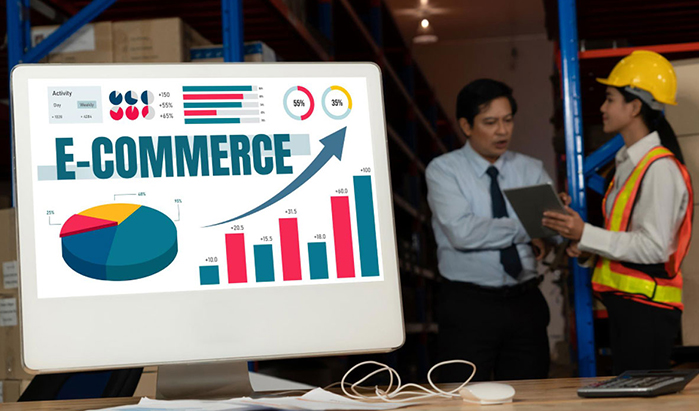
E-commerce SEO in 2026
Your PDP/PLP is the homepage where money moves.
- PDP essentials: fast, stable, Product schema (price, availability, rating), a compact AEO block with specs, comparison table, and 3–5 FAQs.
- PLP essentials: filters that don’t wreck crawlability, fast interactions (INP), scannable headers/tiles, short intro clarifying selection criteria.
- Reviews = answers: Mine reviews for FAQs; display snippets with structured data.
- Content that sells: comparisons, sizing/fit tools, troubleshooting, compatibility, quick “how to use” videos.
- Stop: shipping thin blogs disconnected from the catalog; upgrade the assets people already use to buy.
Related read: How Can Online Stores Drive Organic Traffic Ecommerce SEO Services?
Demand Capture Reality (how clicks distribute)
- CTR depends on elements, not just position.
2025 meta-analysis shows Featured Snippets can reach ~42.9% CTR, and the top 3 organic results ~68.7%—but ads and SERP features can skew this dramatically. Plan for snippets/FAQ/video to defend visibility.
- Zero-click is mainstream.
As AI/quick answers expand, a material share of queries ends on-SERP. Winning requires visibility beyond blue links: rich results, local, shopping, video, AO citations.
Measuring Success: The New SEO KPIs
Measure what proves business impact, not just traffic.
- Per-surface visibility: presence in snippets, FAQs, videos, shopping, local packs, AI Overview citations (track coverage + clicks where available).
- CWV status (field data): % of key templates in “Good” for LCP/INP/CLS.
- Answer coverage: % of priority pages with complete AEO blocks and matching schema. Google for Developers
- Entity momentum: branded search lift, high-quality mentions, review volume/recency.
- Assisted conversions: GA4 paths where organic assists the sale/lead, not just last-click.
- E-com: revenue from organic by template (PDP/PLP), add-to-cart rate, product impressions with rich results.
Cadence that works: Weekly to learn. Monthly to decide. Quarterly to bet bigger.
Quick Wins vs Long Bets (pick both)
- Quick: schema rollout to key templates, AEO blocks on your top 20 URLs, CWV fixes on the slowest templates.
- Long: entity/brand authority (reviews, PR citations), AEO-native content models, information architecture refresh.
Final Thoughts: Build an Adaptive SEO Strategy
2026 rewards brands that answer clearly, load quickly, and earn trust. Put AEO blocks everywhere that matter. Fix technical debt where revenue lives. Build entities and assets worth citing. Measure surfaces, not just positions, and connect them to the pipeline. That’s how you stop chasing algorithms and start compounding advantage.
If you need a partner to turn this into a quarterly operating system, our SEO team at Verve Media might just be what you are looking for. From AEO patterns and schema rollout to enterprise CWV and e-commerce performance, at our top-ranking SEO agency in Mumbai, we help you set a solid base for winning in 2026.
Keep in mind, the next era of search isn’t coming; it’s already here, and it's always better to be prepared.
Quick FAQs (human, helpful, no fluff)
Q1: What are the basics of e-commerce SEO?
A: Make your product and category pages easy to find and easy to buy from.
If you remember one thing, remember this: fast PDP/PLP pages, clear internal links, helpful FAQs and reviews, plus Product schema. Great E-commerce SEO Strategies start with the handful of pages that actually drive revenue, then expand.
Q2: Why does e-commerce still need SEO in 2026?
A: Because a lot of shoppers get answers without clicking.
Zero-click and AI summaries mean fewer visits, so the importance of SEO for e-commerce is higher: you’ve got to win visibility in rich results and then convert the clicks you do get with speed, trust, and answer-ready content.
Q3: What should good Ecommerce SEO Services include?
A: A revenue-first plan and the muscle to ship it.
From Ecommerce SEO Services, expect a technical audit (Core Web Vitals, crawl/indexing, structured data), fixes on your top money pages, and content that answers buyer questions—comparisons, sizing, troubleshooting. Ongoing work: review velocity, internal linking, and measurement tied to sales.
Q4: Do I need a web development agency or an SEO agency?
A: Ideally, both as they solve different problems.
A web development agency handles templates, speed, UX, and schema at scale. An SEO agency sets direction, prioritizes what to fix first, writes briefs, and proves impact. If you have to choose, start with SEO strategy, then pull dev in to execute.
Q5: What’s the difference between E-commerce SEO Strategies and e-commerce SEO?
A: Strategy is the “what and why”; SEO is the “how.”
E-commerce SEO Strategies decide the order of work and how it ties to revenue. e-commerce SEO is the doing—faster pages, smarter schema, better internal links, and content that removes buyer friction.
Q6: Can a digital marketing agency handle SEO alongside ads and social?
A: Yes. Just make sure SEO has a clear owner.
The right digital marketing agency, like Verve Media, will align creative, landing pages, and reporting so paid and organic reinforce each other. Ask who leads SEO day-to-day and what the technical roadmap looks like.
Q7: How fast will we see results from an SEO agency?
A: Technical wins can lift things quickly; authority compounds over time.
Fix your top 10 revenue URLs first, you’ll often see early signs (better visibility, richer results) in weeks, with stronger revenue impact over a few cycles.
.jpg)
.jpg)















.jpg)


.png)

.png)


