Home / Blogs / 7 Hard Truths About AI Visibility Measurement and GEO performance
7 Hard Truths About AI Visibility Measurement and GEO performance
 SEO
SEO
TLDR: Measuring AI visibility
- AI visibility measurement matters, but it does not work like rank tracking.
- Your brand can appear in AI answers without getting full click credit.
- AI SEO, AI search optimisation, and Generative Engine Optimisation need more than one metric.
- The goal is not perfect attribution. The goal is a reporting view you can trust.
The Reporting Problem With AI Visibility
This is not a blog about how AI is changing search. It is a blog about why measuring that change is harder than most teams admit.
A lot of marketing teams still use an old SEO instinct: find one number, track it weekly, and treat movement as proof. That worked well enough with rankings. It does not work nearly as well with AI-led discovery.
AI visibility is messier. A brand can be cited without being clicked. A page can influence an answer without being provably responsible for it. A prompt can produce different outputs for different users. And a weekly report can look stable while the answer layer changes every day.
That is why AI visibility measurement needs a different mindset. Not more reporting noise. Better reporting honesty.
1. AI Visibility Is Not One Metric
If your team is looking for the AI version of a keyword ranking, it is looking for the wrong thing.
There is no single metric that fully captures AI SEO optimisation performance across AI answers, cited sources, brand mentions, and follow-up journeys. One platform may mention your brand often. Another may not. One answer may cite you. Another may paraphrase your positioning without linking clearly.
This matters because bad reporting starts with false simplicity. A neat-looking score may feel useful, but it can hide the real picture. In practice, AI visibility measurement is closer to a mix of search performance, brand visibility, and assisted influence than a single SEO KPI.
That is true whether the work is being done by an AI SEO Agency, a traditional SEO Agency, or an in-house team.
2. Your Brand Can Appear In AI Answers Without A Click
A mention is not a visit. A citation is not a session. And presence is not always attributable traffic.
This is one of the hardest shifts for teams used to classic SEO reporting. In AI-led search, your brand can shape the answer, appear in the answer, or influence trust before the user clicks anything. That means a real visibility win may not show up as a clean spike in traffic.
This is where AI search optimisation gets misunderstood. Teams assume that if they cannot tie a mention to an immediate click, then nothing happened. That is too narrow. AI answers can influence recall, comparison, and trust before analytics ever gets a chance to record a visit.
For a reporting team, the takeaway is simple: do not confuse lack of click proof with lack of visibility value.
3. Mentions, Impressions, And Clicks Do Not Move Together
Old SEO reporting taught teams to expect a rough pattern: more impressions, then more clicks, then better results.
AI visibility does not behave that neatly.
A page can earn more AI mentions and keep traffic flat. Another page can lose clicks and still improve brand visibility. A query can generate answer exposure without driving direct sessions. That means mentions, impressions, clicks, and conversion quality often move in different directions at the same time.
This is why AI visibility measurement needs separation between:
- Presence,
- Traffic,
- Business impact.
Those are connected, but they are not interchangeable. Strong AI SEO reporting should make that visible instead of flattening everything into one trend line.
4. The Same Search Can Show Different AI Answers
This is where reporting gets uncomfortable.
The same search does not always produce the same AI result. Output can change based on timing, context, location, language, device, personalization, or prompt phrasing. That means one screenshot is not evidence. It is a sample.
For Generative Engine Optimisation, that means benchmarking needs repetition, prompt grouping, and competitor comparison. You are not tracking one fixed result the way you tracked one fixed ranking position. You are tracking a range of likely exposures across prompt groups and user contexts.
That is why serious AI optimisation needs patterns, not snapshots. A one-off brand mention is interesting. A repeated citation trend is much more useful.
5. Weekly Reports Can Miss Fast Changes
Weekly reporting can be useful. It can also be misleading.
AI answers can change quickly. Citation patterns can shift. Competitor visibility can rise or disappear without the clean movement teams are used to in rank-tracking tools. If your report captures only one weekly snapshot, it may miss the real story.
This is especially important for agencies and in-house teams trying to show progress. An AI SEO Agency, SEO Agency, or digital marketing agency that reports AI visibility exactly like rankings is probably simplifying the problem too much.
A better approach is to use:
- Repeated prompt checks,
- Grouped query themes,
- Rolling trend windows,
- And commentary that explains what changed, not just what moved.
That is not softer reporting. It is more defensible reporting.
6. You Cannot Always Prove What Influenced The Answer
Most clients want a simple answer to a fair question: which page influenced this AI result?
Sometimes you can make a strong case. Often, you cannot prove it neatly.
A single answer may reflect multiple pages, multiple sources, broader entity understanding, and supporting context across a site. A service page may help. A supporting guide may help. A comparison page may help. The influence can be real without being cleanly attributable.
This is where AI visibility measurement needs maturity. The better question is not, “Can we prove this one page caused this one answer?”
The better question is, “Which themes, page types, and entity signals seem to improve our share of visibility over time?”
That is the kind of thinking that makes AI SEO useful at the business level.
7. Better GEO Can Build Trust But Reduce Traffic
This is the truth that breaks the old SEO dashboard.
Better GEO performance can improve trust and reduce traffic at the same time.
Some AI answers satisfy part of the query before the click. The user may still trust your brand more, remember your name, or move closer to a decision, even if fewer people visit the page directly. That is uncomfortable if your reporting model still treats traffic as the only proof of value.
This is why AI SEO service reporting needs a wider definition of success. Visibility, trust, assisted influence, qualified visits, and conversion quality all matter. Raw traffic still matters too. It just cannot be the only lens anymore.
A brand can lose low-intent clicks and still gain stronger visibility where it counts.
What To Measure Instead
If AI visibility is not one metric, what should teams actually track?
The most practical answer is share of voice across AI and search surfaces, supported by a smaller set of measurable signals:
- Mention share,
- Citation share,
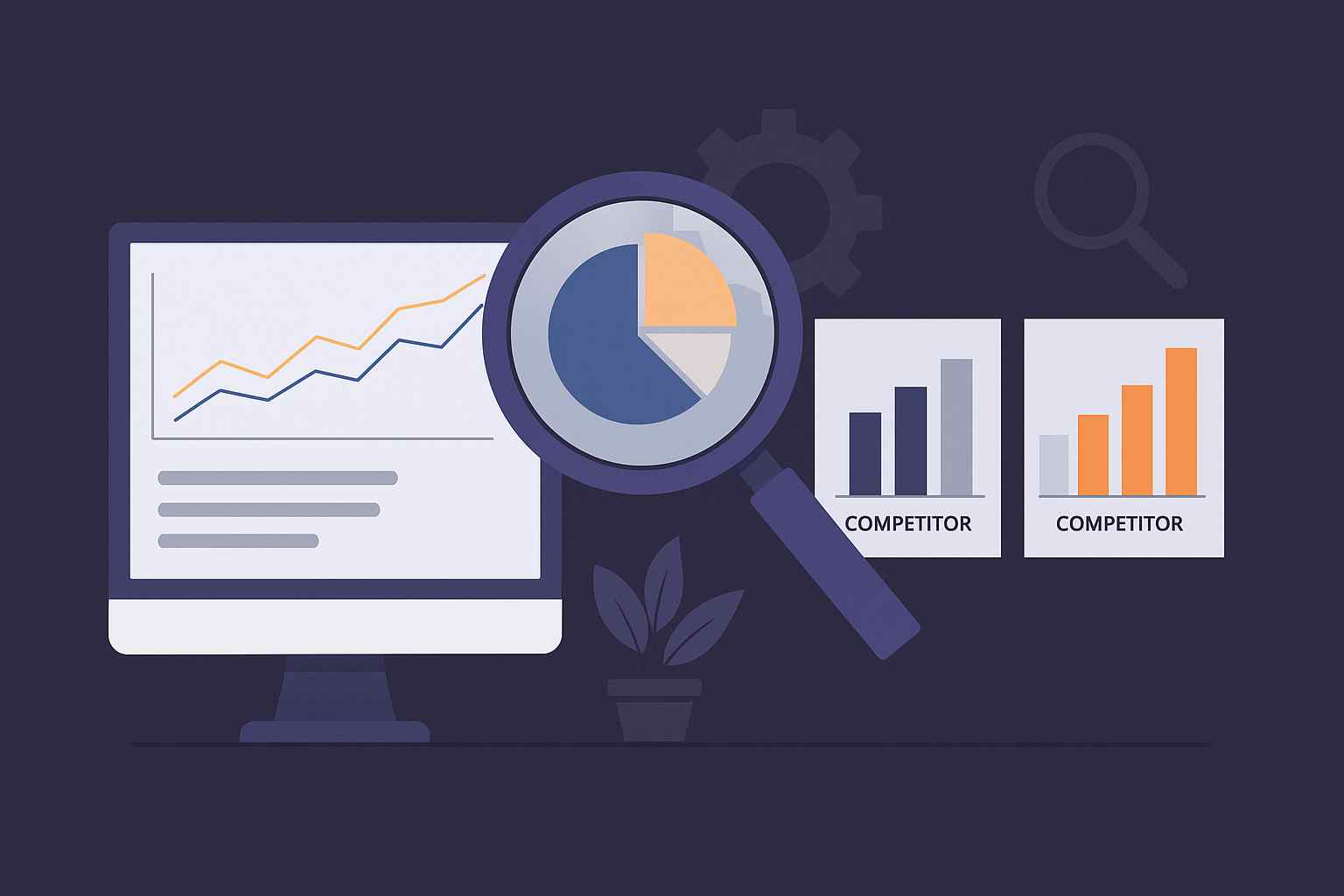
- Competitor share of voice,
- Qualified search traffic,
- Conversion quality,
- Framing or sentiment.
That gives you something much more useful than a synthetic “AI rank.” It gives you a working view of whether your brand is showing up, how often it is being referenced, and whether that visibility is helping the business.
Strong AI visibility measurement is not about chasing one perfect number. It is about combining a few imperfect but meaningful ones.
A Simple GEO Measurement Stack
Most teams do not need a complex stack. They need a stack they can actually use.
A practical setup for AI search optimisation should include:
- Search Console for impressions, clicks, and page trends
- Analytics for engagement and conversion quality
- Prompt tracking across a defined set of queries
- Competitor checks on the same prompts
- Manual review for sentiment, framing, and citation quality
- One dashboard that connects visibility to business outcomes
Whether you call it AI SEO, AI SEO optimisation, AI optimisation, or Generative Engine Optimisation, the principle stays the same: choose the few signals you can explain with confidence.
A strong AI SEO Agency should be honest about that. So should any experienced SEO Agency or digital marketing agency. Good reporting is not about making the numbers look cleaner than they are. It is about making the decision-making clearer than it was before.
A Simple GEO Dashboard For Clients
This is where most reporting either becomes useful or becomes theatre.
A good client dashboard should not try to prove everything. It should help the client understand three things:
- Where visibility is improving,
- What that means for the business,
- What the team should do next.
At Verve Media, a practical GEO dashboard usually includes:
| Metric | What It Shows |
|---|---|
| AI Mention Share | How often the brand appears across tracked prompts |
| Citation Share | How often the brand is used as a source |
| Competitor Share Of Voice | Who is owning the topic across key queries |
| Qualified Search Traffic | Whether visibility is driving engaged visits |
| Conversion Quality | Whether search visitors are moving toward action |
| Sentiment / Framing Notes | How the brand is being described |
| Key Insight | What changed and why it matters |
| Next Action | What the team should do next |
That format works because it is simple enough to explain and strong enough to act on. It also creates a better service conversation, whether the client needs an AI SEO service, support from an AI SEO Agency, or broader help from a digital marketing agency.
The Real Takeaway
The hard part about AI visibility is not just earning it. It is measuring it honestly.
That is the real takeaway for brands investing in AI SEO, AI search optimisation, and AI visibility measurement. The teams that do this well will not be the ones chasing one perfect metric or one impressive screenshot. They will be the ones building a reporting model that combines search data, AI visibility signals, competitor context, and business outcomes into something they can actually trust.
In SEO, we learned to overtrust rankings.
In AI-led discovery, we are learning not to overtrust visibility tools either.
Related Read: How Generative AI Impact Website Rankings and Traffic
Frequently Asked Questions
Q1. What Is AI Visibility Measurement?
A. AI visibility measurement is the process of tracking how often your brand appears, is cited, or is mentioned across AI-led search experiences. It usually includes signals like mention share, citation share, share of voice, and qualified traffic rather than one ranking-style metric.
Q2. What Is Generative Engine Optimisation?
A. Generative Engine Optimisation is the practice of improving how your brand and content appear in AI-generated answers, summaries, and search experiences. It focuses on visibility, extractability, trust, and content usefulness across answer-led discovery.
Q3. What Is AI SEO?
A. AI SEO is SEO adapted for AI-led search environments. It combines classic SEO fundamentals with stronger content clarity, entity consistency, citation readiness, and AI visibility measurement to help brands appear across both traditional search and AI-driven search results.
Q4. What Is AI SEO Optimisation?
A. AI SEO optimisation is the process of improving pages so they are easier for search engines and AI systems to understand, cite, and surface. That includes better structure, stronger internal linking, clearer messaging, and more useful, trustworthy content.
Q5. What Is AI Search Optimisation?
A. AI search optimisation means making your content easier to discover, interpret, and use in AI-led search journeys. It includes technical SEO, content clarity, citation readiness, and stronger topical coverage across the questions your audience is asking.
Q6. Do I Need An AI SEO Agency Or A Traditional SEO Agency?
A. An AI SEO Agency is often a better fit when your goal is improving visibility across AI answers, citations, and answer-led discovery. A traditional SEO Agency may still be effective, but it should understand AI visibility measurement, AI search optimisation, and reporting beyond rankings.
Q7. Can A Digital Marketing Agency Help With AI Visibility Measurement?
A. Yes, a digital marketing agency can help with AI visibility measurement if it understands search data, AI-led discovery, content performance, and reporting logic. The key is not the label of the agency, but whether it can measure visibility in a practical and defensible way.
Q8. How Does AI SEO Affect Rankings And Traffic?
A. AI SEO can affect rankings and traffic indirectly by improving how clearly your content is understood, cited, and surfaced. For the wider traffic impact, connect this.
.jpg)
.jpg)





























.jpg)


.png)

.png)


