Home / Blogs / Do I Need AI SEO? Yes. We've Got 3 Reasons Why
Do I Need AI SEO? Yes. We've Got 3 Reasons Why
 SEO
SEO
Quick Takeaway
- Customers are now discovering and comparing brands before they click.
- Ranking still matters, but being cited, summarised, and trusted in AI-led answers matters too.
- Zero-click searches do not mean zero value. They mean SEO must build influence before the visit.
- AI search traffic is still early, but growing fast enough to prepare for now.
- At Verve Media, we help brands become easier to find, understand, cite, and choose across Google, AI Overviews, ChatGPT-style discovery, and traditional search.
Do I Need AI SEO for My Business?
Yes, if your customers are deciding before they click.
That is the real shift.
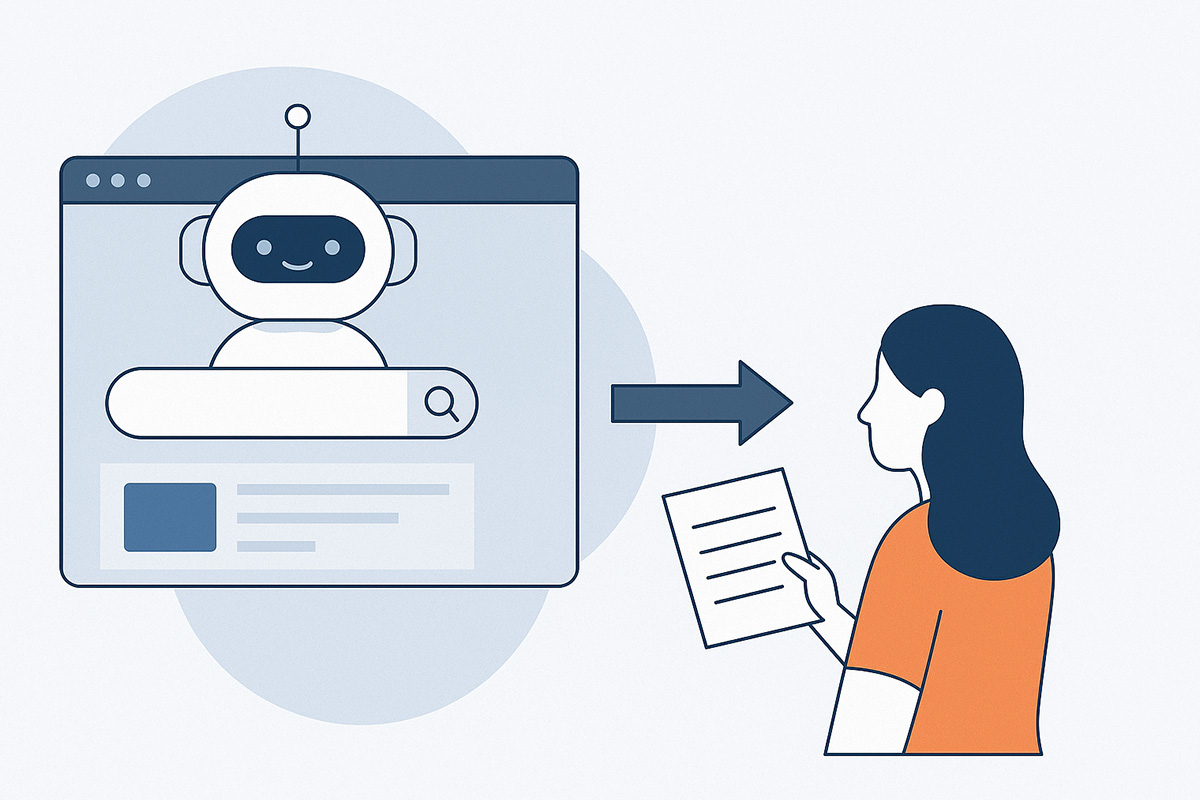
A few years ago, ranking on Google meant you had a strong chance of winning the visit. Today, the customer may get a summarised answer, compare three brands, scan reviews, ask ChatGPT, check an AI Overview, and only then decide whose website deserves the click.
So the question is not just, “Are we ranking?”
The better question is, “Are we present in the places where the shortlist is being formed?”
That is why AI SEO matters.
AI SEO helps your brand become easier to understand, easier to cite, easier to trust, and easier to choose across Google AI Overviews, ChatGPT-style answers, Perplexity-style results, Gemini-style responses, and other answer-led search experiences.
This is already happening at scale. Google said AI Overviews are used by over 1.5 billion users every month, and in major markets like the U.S. and India, they are driving over 10% more usage for query types where they appear.
Traditional SEO still matters. But AI SEO adds the next layer: brand clarity, answer-ready content, citations, structured pages, authority signals, and better intent matching.
Your customer may now make half the decision before reaching your website. AI SEO helps you show up in that half.
Why Brands Are Suddenly Asking About AI SEO
Most brands do not wake up one day and say, “We need AI SEO.”
They notice smaller things first.
A page still ranks, but the clicks feel softer. A blog gets impressions, but not enough serious enquiries. A competitor starts showing up in AI answers. A customer reaches out already comparing three brands because an answer engine gave them a shortlist. The SEO report still shows activity, but the journey feels harder to explain.
That is usually when AI SEO becomes real.
The audience has moved too. OpenAI research reported that by July 2025, ChatGPT had 700 million users sending 18 billion messages per week. That is not a side habit anymore. It is becoming part of how people ask, compare, plan, and decide online.
Traditional SEO is not dead. But search is no longer only happening on your website or even on a list of blue links. Part of the decision now happens before the click.
At Verve Media, we look at AI SEO as a visibility and trust problem first.
- Can search engines understand you?
- Can AI systems summarise you?
- Can users trust you?
- Can the page convert once they land?
If the answer is unclear, AI SEO is not optional anymore.
Search Has Moved Upstream. Your Website Is No Longer Always the First Touchpoint.
This is the part many marketers are feeling but not always naming.
Search has moved upstream.
Earlier, the website was often where a user first learned about your brand. Now, they may first meet you inside an AI answer, an Overview, a Reddit thread, a comparison snippet, a review result, or a shortlist created by an answer engine.
That means your website is no longer always the beginning of the journey. Sometimes, it is the confirmation point.
This is not just a feeling. SparkToro and Datos found that 58.5% of U.S. Google searches and 59.7% of EU Google searches ended without a click in 2024. Users are still searching, but they are not always reaching websites immediately.
This changes the job of SEO.
SEO has to make sure your brand is present before the click, convincing during the click, and conversion-ready after the click.
That is where many brands are currently losing visibility. Their SEO may not be failing. Their customer’s decision may simply be starting earlier than their website.
Reason 1: Your Customer May Get the Answer Before They Click
The first reason you need AI SEO is simple: your customer may get the answer before they ever visit your website.
Ahrefs found that, for informational keywords triggering AI Overviews, the average position-one CTR dropped from 0.073 in December 2023 to 0.016 in December 2025. Ahrefs summarised this as AI Overviews correlating with a 58% lower average CTR for the top-ranking page.
That sounds scary, but the real takeaway is not “SEO is dead.”
The real takeaway is that the click is no longer the first moment of influence.
A user may read the AI answer, understand the basics, see which brands or sources are mentioned, and form an early opinion before they ever land on a website.
So demand is not gone. It has moved upstream.
If your brand is missing from that early answer layer, you may lose the lead before GA4 even records a session.
That is why AI SEO is not just traffic protection. It is decision protection.
Reason 2: Ranking Is Not Enough If AI Does Not Trust You Enough to Mention You
Traditional SEO asks, “Can we rank for this keyword?”
AI SEO asks a sharper question: “Can AI systems understand us clearly enough to cite, summarise, or associate us with this topic?”
That is a different game.
A vague brand becomes invisible faster in AI-led search. If your service pages sound like every competitor, your blogs repeat generic advice, your claims have no proof, and your brand facts are inconsistent, AI systems have fewer reasons to connect you to the answer.
Semrush frames AI SEO as the added layer brands need alongside traditional SEO, because brands now need visibility not only in search engines like Google and Bing, but also inside AI systems. They also predict that the traffic from large language models (LLMs) will surpass traffic from traditional organic search in 2028. This means you also need to optimise for AI platforms alongside traditional search engines to maintain brand visibility in the long run.
That means AI SEO is not just keyword placement.
It forces your brand to answer sharper questions:
- What do we want to be known for?
- Which topics should we own?
- What proof supports our claims?
- Are our services clearly explained?
- Are our pages structured for humans and machines?
- Are we mentioned or trusted beyond our own website?
- Can an AI system summarise our brand accurately?
This is where Verve’s strategy, SEO, content, web, and digital marketing work come together. We do not look at AI SEO as “write more AI content.” We look at whether your brand is clear enough to be understood, trusted enough to be cited, and structured enough to be found.
Related read: How to Rank on ChatGPT
Reason 3: The Clicks You Do Get Need to Work Harder
AI SEO is not only about getting more visibility. It is also about making the clicks you do get more valuable.
If users are getting basic answers earlier in the search journey, the people who eventually click may be more informed, more comparison-ready, and more specific in what they need.
That means your page cannot be weak.
It has to answer fast.
It has to show proof.
It has to explain difference.
It has to reduce doubt.
It has to guide the next action.
Someone searching for an AI SEO Agency may not need a basic explanation of SEO. They may want to know:
- Can this agency help us appear in AI answers?
- What does the AI SEO service include?
- Is this different from traditional SEO?
- Will it improve visibility or just produce more content?
- What metrics matter beyond rankings?
- Can this improve lead quality?
Good AI SEO helps match intent faster. It makes the page more useful for the reader, easier for AI systems to understand, and stronger as a conversion path.
This is why AI SEO should sit inside a larger digital marketing strategy. Visibility without trust is weak. Trust without action is incomplete.
What Marketers Are Getting Wrong About AI SEO
Most teams are making one of two mistakes.
Some are ignoring AI SEO because their rankings still look fine.
Others are rushing into AI SEO by publishing more AI-written content.
Both are risky.
The AI search layer is also moving fast. Semrush found that AI Overviews appeared for 6.49% of keywords in January 2025, rose to nearly 25% in July, and then settled at 15.69% in November 2025. Waiting for the landscape to become “stable” may not be a strategy.
If you ignore AI SEO, your brand may slowly disappear from the answer layer where users are forming opinions. If you treat AI SEO as content volume, you may create more generic pages that both AI systems and humans ignore.
AI SEO is not about doing more.
It is about becoming clearer, more credible, and easier to cite.
That is the part many brands miss. They think AI SEO is a tool problem. It is usually a clarity problem first.
What AI SEO Actually Means Without the Buzzword
AI SEO is not “using AI to write blogs.”
That is the laziest version of it.
AI SEO means making your brand, content, and website easier for AI-led search systems to understand, extract, cite, and recommend.
A proper AI SEO approach includes:
- AI visibility audits
- Topic and entity clarity
- Answer-first content
- Direct FAQs
- Structured headings
- Schema markup
- Source-backed claims
- Expert or author signals
- Internal linking
- Third-party authority signals
- Content hubs
- Conversion-focused landing pages
- Reporting beyond rankings
Search itself is also becoming more multi-format. Google Lens now handles more than 25 billion queries per month, and Google says one in four Lens visual searches has commercial intent. That means search is increasingly visual, comparative, and purchase-aware, not only text-led.
Related read: AI SEO service boost visibility
The key is balance. AI SEO needs technical structure, content clarity, brand authority, and conversion thinking. Leave one out, and the strategy becomes incomplete.
Before You Ask for AI SEO, Ask This
Before we talk about tools, we use a simple readiness lens.
| Question | Why It Matters |
|---|---|
| Can AI clearly understand what we do? | If your positioning is vague, you are harder to cite. |
| Do we answer customer questions directly? | AI systems prefer clear, extractable answers. |
| Do we show proof, sources, reviews, or expertise? | Trust signals support both users and AI systems. |
| Are we visible beyond our own website? | Third-party mentions strengthen authority. |
| Do our pages guide users to action? | Visibility without conversion wastes demand. |
| Are we measuring more than rankings? | AI SEO impact may show through citations, branded search, and lead quality. |
This is the difference between adding AI SEO as a buzzword and actually building for AI-led discovery.
What Verve Would Fix First
At Verve Media, we would not start by asking, “Which AI tool should we use?”
We would start by checking five things.
Brand clarity: Can a person or AI system understand what your brand should be known for?
Content structure: Are your answers direct, well-headed, and easy to extract?
Authority signals: Do your pages include proof, sources, reviews, author signals, or third-party validation?
Intent match: Are users landing on pages that answer what they actually searched for?
Conversion path: Once they land, is the next action clear?
This is where an AI SEO Agency, SEO Agency, and digital marketing agency has to think beyond content production. The job is not to generate more pages. The job is to make the brand easier to find, understand, trust, and choose.
A Simple Scenario: Why Ranking Is No Longer Enough
Imagine you run SEO for a B2B service brand.
Your blog ranks. Your impressions grow. The report looks fine.
But when a potential customer asks an AI tool for “best agencies for AI SEO strategy,” your brand does not appear. When they compare options, competitors are mentioned more often. When they finally reach your site, your service page explains the service but does not show enough proof, process, or outcomes.
Technically, SEO is happening.
Strategically, the brand is missing from the decision.
That gap is what AI SEO is meant to fix.
It is not about chasing every new search trend. It is about making sure your brand is present when the shortlist is being formed.
Quick Self-Check: Signs You Need AI SEO Right Now
You probably need AI SEO if:
- Your rankings are stable, but clicks are dropping.
- Your competitors appear in AI answers, but you do not.
- Your content answers questions, but not directly enough.
- Your blogs get impressions, but do not influence enquiries.
- Your pages lack FAQs, schema, sources, or expert signals.
- Your brand facts are inconsistent across pages.
- Your organic leads are becoming less qualified.
- Your SEO reporting still focuses only on rankings and traffic.
- Your category or service pages are not built for AI summaries.
- Your website has useful information, but it is not structured clearly.
Your SEO may not be failing. The search journey may have changed around it.
The Hard Truth: AI SEO Will Not Save Weak Positioning
AI SEO will not save a page that says the same thing as ten competitors.
- It will not help if your brand has no clear positioning.
- It will not help if your content has no proof.
- It will not help if your claims are vague.
- It will not help if your pages answer the question but give no reason to trust the answer.
- It will not help if the user lands on the site and still does not know what to do next.
That is why AI SEO is not only optimisation.
It is brand clarity, content strategy, technical structure, authority-building, and conversion thinking working together.
The brands that win will not simply publish more. They will explain better.
Common Myths About AI SEO
| Myth | Reality |
|---|---|
| AI SEO replaces traditional SEO | It builds on traditional SEO. You still need technical SEO, content, links, and strong pages. |
| AI SEO is just AI-written content | It is about structure, authority, citations, intent, and trust. |
| Rankings no longer matter | Rankings still matter, but visibility now has more layers. |
| Only big brands need AI SEO | Any brand that depends on search discovery needs it. |
| AI optimisation is only technical | It also needs content, brand clarity, E-E-A-T, and conversion strategy. |
| AI SEO gives instant results | It improves visibility over time through clarity, consistency, and authority. |
The biggest myth is that AI SEO is a trick.
It is not.
AI SEO is what happens when SEO adapts to how people now ask, compare, shortlist, and choose.
Mistakes Brands Make When Optimising for AI Search
The easiest mistake is publishing more AI-generated content and calling it AI SEO.
That usually makes the problem worse.
Avoid these mistakes:
- Publishing generic AI content
- Writing only for machines and not people
- Ignoring human trust signals
- Skipping expert review
- Making claims without sources or proof
- Leaving pages without FAQs
- Ignoring schema and structured data
- Using vague service descriptions
- Chasing tools instead of strategy
- Not building topical authority
- Ignoring brand mentions outside your site
- Forgetting conversion paths
AI search rewards clarity. But users still reward trust.
The best AI SEO content should be direct enough for answer engines, useful enough for readers, and persuasive enough to move the right user forward.
What AI SEO Success Looks Like Beyond Rankings
AI SEO success cannot be measured only through keyword rankings.
Rankings still matter, but they are no longer the full scoreboard.
AI-led traffic is still small for many websites, but it is growing fast. Semrush cited Previsible data showing AI search traffic rose 527% year over year, from about 17,000 to 107,000 sessions across 19 GA4 properties.
Better AI SEO metrics include:
- AI answer visibility
- Citations in AI-generated responses
- Branded search growth
- Non-branded visibility
- Featured snippet presence
- People Also Ask visibility
- Content engagement
- Assisted conversions
- Lead quality
- Call and WhatsApp clicks
- Organic conversion actions
- Visibility across ChatGPT, Google AI Overviews, Perplexity, Gemini, and other answer engines
This is where an SEO Agency or digital marketing agency needs to evolve its reporting.
The real question is not only, “Did we rank?”
The better question is, “Are we being found, cited, trusted, and chosen by the right audience?”
How Verve Media Helps Brands Build AI-Ready Search Visibility
At Verve Media, we help brands move from traditional SEO visibility to AI-ready search visibility.
As an AI SEO Agency, SEO Agency, and digital marketing agency, our role is not to create more content for the sake of content. It is to build a clearer search system around your brand.
That includes:
- Auditing current AI visibility
- Identifying where competitors are being cited
- Improving page structure for AI readability
- Building answer-ready content
- Strengthening topic clusters
- Improving schema and structured data
- Aligning content with search intent
- Adding proof, sources, and trust signals
- Improving service, product, and landing pages
- Tracking visibility beyond rankings
- Connecting AI SEO to enquiries, calls, leads, and conversions
That is the difference between using AI and building for AI-led discovery.
Related read: LLMO in 2026: How to Rank in AI Search Without Keywords
Final Take: AI SEO Is the New Search Baseline
So, do you need AI SEO?
Yes, if search visibility matters to your business.
Not because traditional SEO is dead. It is not. Traditional SEO still gives your website its technical base, content structure, authority signals, and organic visibility.
But AI SEO adds the next layer.
It helps your brand show up where users are now asking direct questions, comparing answers, and trusting cited sources before they click.
Your customer may now make half the decision before reaching your website.
AI SEO helps you show up in that half.
Want Your Brand to Show Up Where Search Is Going?
At Verve Media, we help brands move from traditional SEO visibility to AI-ready search visibility.
Our AI SEO approach connects content, structure, authority, brand clarity, technical SEO, and conversion paths, so your brand is prepared for Google AI Overviews, ChatGPT-style discovery, Perplexity-style answers, Gemini-style search, and whatever comes next.
Let’s build an AI SEO strategy that helps your brand get found, cited, trusted, and chosen.
.jpg)
.jpg)




























.jpg)


.png)

.png)


